The Scarecrow isn’t just another serial killer drama. It’s a devastating exploration of institutional rot, collective guilt, and the wounds that don’t heal with time. Based on the infamous Hwaseong serial murder case (which also inspired Bong Joon-ho’s Memories of Murder), this ENA drama has captivated Korean audiences and become a ratings phenomenon . But does its ambitious vision hold together? And should you prepare for heartbreak? Let’s dive in.
What Is The Scarecrow? A Crime Drama with a Difference
The Scarecrow is a crime investigation thriller set in 1988 Gangseong. It follows Kang Tae-joo (Park Hae-soo), a principled detective demoted to his rural hometown after serving as an ace investigator. He finds himself investigating a serial murder case and forms an unexpected, uneasy partnership with prosecutor Cha Si-young (Lee Hee-joon)—his former school rival and a man he despises .
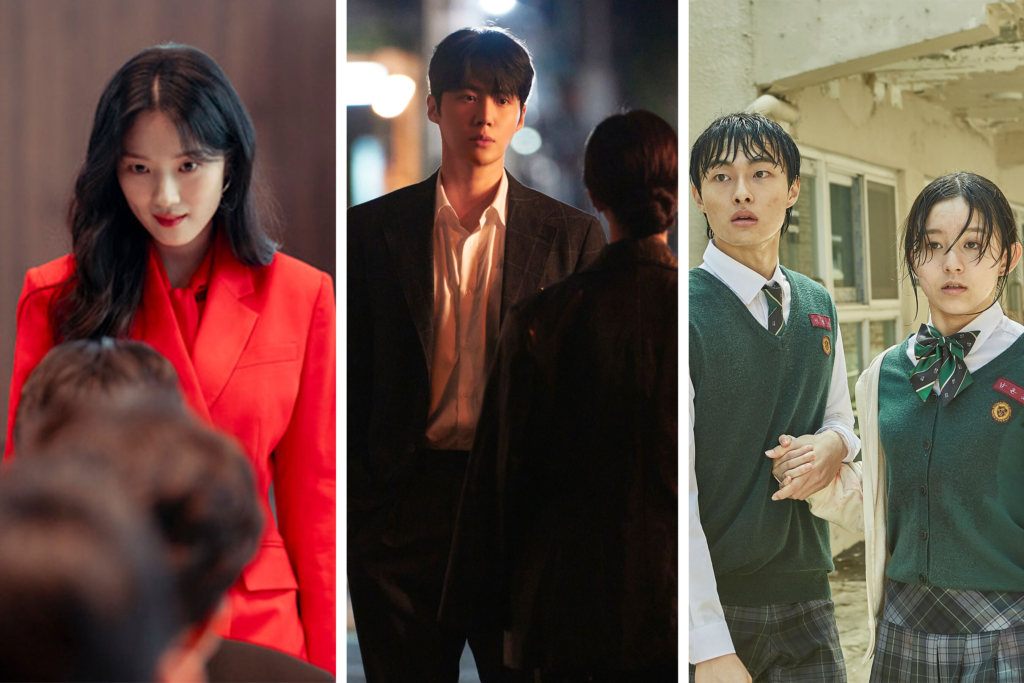
The drama moves between timelines, with the investigation unfolding alongside the long-term consequences of the case . What initially appears to be a straightforward hunt for a killer transforms into something far more painful: a collective tragedy where guilt, compromise, denied truths, and grief settle layer upon layer .
The Good: Why It’s One of 2026’s Best Dramas
📊 Record-Breaking Ratings
The numbers speak volumes. Starting with a 2.9% rating, The Scarecrow climbed steadily to finish with a series-best 8.1% nationwide rating . It became ENA’s second-highest-rated drama ever, behind only Extraordinary Attorney Woo . The drama also dominated the 2049 demographic, peaking at 3.0% .
🎭 Stellar Performances
Park Hae-soo delivers what many consider a career-defining performance as Kang Tae-joo. The actor, known for Squid Game and Money Heist, portrays a man who isn’t simply “tortured”—he’s “rotting from the inside” . His performance is described as “full of micro-expressions: the half-second delay before answering, the way he avoids eye contact when someone mentions the old case” . Park himself noted this was the first time he’d felt such tangible love from audiences, even being recognized while wearing a mask at a shopping mall .
Lee Hee-joon is equally compelling as Cha Si-young. He’s not a cartoon villain—he’s “reasonable, which makes him so very real… He is the kind of man who can justify anything if it keeps the machine running” . The complex dynamic between the two leads anchors the entire story.
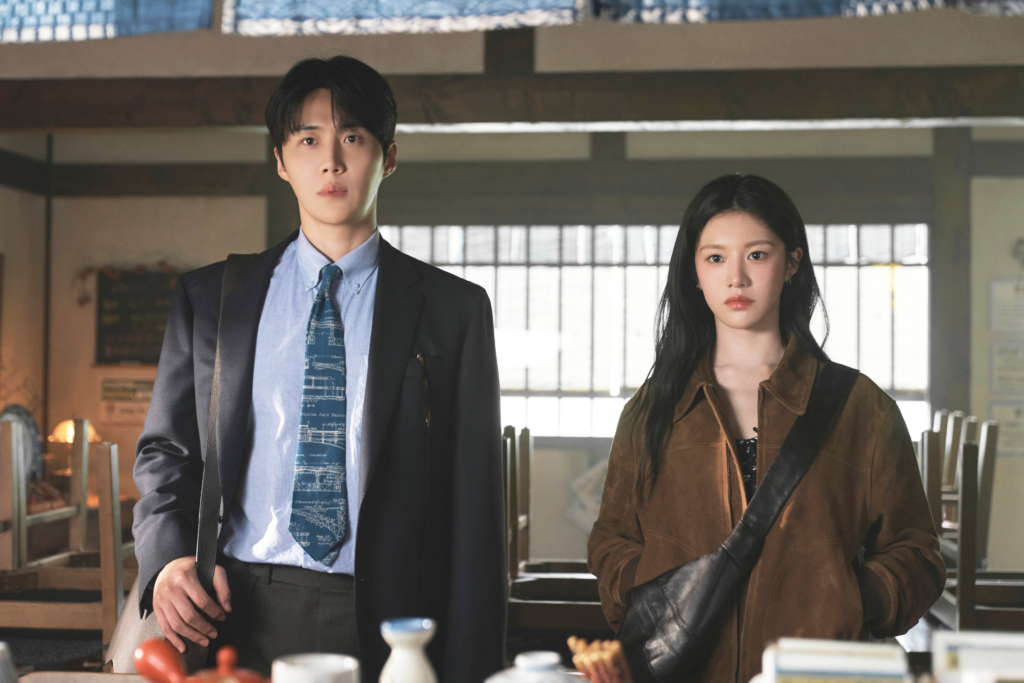
Jung Moon-sung, as the true culprit Lee Ki-hwan, delivers a chillingly understated performance. He’s not portrayed as an exceptional monster, but as an ordinary, socially invisible man consumed by envy and resentment—which makes him all the more unsettling .
🎬 Powerful Direction and Writing
Director Park Joon-woo (Taxi Driver, Crash) and writer Lee Ji-hyun have created a drama that uses emptiness as its visual language: empty fields, empty hallways, empty chairs in interrogation rooms . The cinematography is remarkable, with the camera lingering on spaces long after characters leave them, as if the room itself is remembering what happened there .
The writing consistently avoids easy moral binaries. As one reviewer notes: “With the exception of the victims, almost no one is ever reduced to a single narrative function” . This refusal to simplify characters is one of the drama’s greatest strengths.
💔 An Emotionally Devastating Finale
The final episodes are described as an “emotional roller coaster,” with one viewer noting they were “crying, furious, and then suddenly felt a sense of relief” . The closing scene, where Tae-joo dreams of a reality in which everyone is alive and happy, has left many viewers in tears .
The production team deliberately chose reality over a feel-good ending, despite pressure from the channel and production company to go for a more satisfying resolution . Director Park explained:
“The production company and the channel also wanted a feel-good ending. But that kind of punishment didn’t happen in reality, did it? There were not just one or two victims, and there are still people suffering because of the case. I didn’t think we could show a clean, satisfying punishment in a drama when it never happened in real life” .
The Divisive: What Critics and Viewers Disagree On
😤 The Unrepentant Ending
The most controversial aspect of The Scarecrow is its refusal to deliver justice. Cha Si-young and other officials who covered up the truth never repent or face punishment . The killer doesn’t experience a dramatic comeuppance.
Some viewers find this deeply unsatisfying. One frustrated review notes: “Even after all those years, the people responsible never admitted their wrongdoing. They continued to live comfortably, enjoying their status and privileges, while the victims were left carrying that pain for the rest of their lives” .
However, other viewers—and the production team—see this as the point. The drama is about the failures of the justice system, not a cathartic victory of good over evil .
🐢 Slow Pacing
Some viewers have complained about the slow pacing . But many see it differently: “The show wanted us to feel the weight of time, the years lost, the evidence ignored, the lives paused. It was not slow because nothing was happening. It was slow because everything that mattered had already happened, and the characters were only at that moment brave enough to look at it” .
🧩 Inconsistent Character Writing
One critical review argues that characters behave inconsistently, particularly Tae-joo’s sister, who suddenly becomes “indifferent” to him after discovering her father’s identity . The same review criticizes the serial killer’s lack of development, noting “we never learn why he did what he did” .
However, most reviews praise the character depth, with one writing: “What makes this drama different is that while most thrillers chase the killer, The Scarecrow chases the moment a society decides to stop looking” .
The Verdict: Is It Worth Watching?
Absolutely—but prepare for a heavy, uncompromising experience.
| If You… | Verdict |
|---|---|
| Love character-driven thrillers | ✅ Essential viewing |
| Appreciate complex, morally grey narratives | ✅ One of the decade’s best |
| Want a satisfying, feel-good resolution | ❌ You’ll be frustrated |
| Prefer fast-paced action | ❌ The pacing is deliberately slow |
The Scarecrow is not a mystery you solve—it’s a wound you sit with . It refuses to glamorize the killer, treats trauma as something that seeps rather than explodes, and understands that “justice delayed is not just justice denied; it is justice distorted” .
As one reviewer beautifully concluded:
“The point is not solving it. The point is owning it. And this is what makes The Scarecrow linger with me long after the final episode” .
My Recommendation: Set aside time to watch it without interruption. Accept that the ending may leave you angry or heartbroken—that’s the intended effect. And if nothing else, appreciate it as a rare Korean thriller that understands the difference between crime and damage: “Crime is an event. Damage is a legacy” .
Frequently Asked Questions
Is The Scarecrow based on a true story?
Yes. The drama is inspired by the Hwaseong serial murder case, where Lee Chun-jae murdered multiple women between 1986 and 1991. The same case inspired Bong Joon-ho’s film Memories of Murder .
What is the ending of The Scarecrow?
The killer confesses, and an innocent man is cleared through a retrial. However, the prosecutor and officials who covered up the truth face no punishment and show no remorse. The final scene shows Tae-joo dreaming of a reality where the tragedy never happened .
Who is the killer in The Scarecrow?
The killer is Lee Ki-hwan (played by Jung Mun-sung), who was Tae-joo’s friend. His brother, Ki-beom, was initially blamed for the crimes .
Is The Scarecrow worth watching?
Yes, if you appreciate serious, character-driven thrillers that prioritize realism over satisfying resolutions. It’s been called “one of the rare Korean thrillers that understands the difference between crime and damage” .