Japanese decorative knotting (組み紐 / Kumihimo and 結び / Musubi) is a refined art form that has been practiced for centuries. Unlike practical knots used for fastening, decorative Japanese knots are created for beauty, ceremony, and symbolism. They appear on kimono obijime (cords), gift wrapping (noshi), tea ceremony equipment, and traditional accessories.
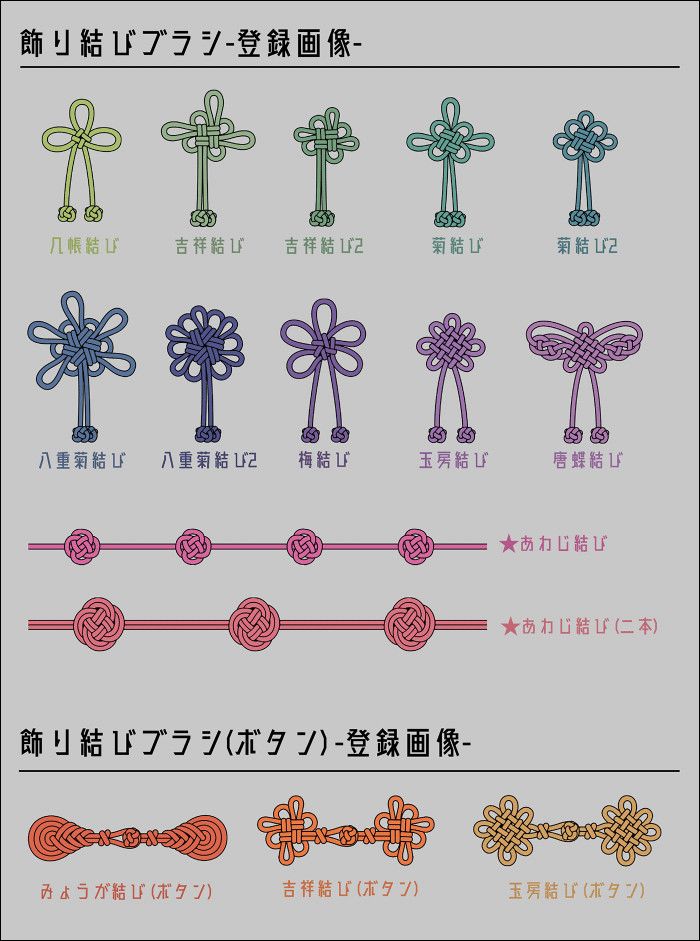
In this guide, you will learn:
- The full meaning of each knot name in Japanese
- Cultural context and traditional uses
- Difficulty levels for each knot
- How these knots connect to Chinese and Western macrame traditions
Note: Your image includes the phrase “節り結びアラブ-登録画像-” — this likely indicates these are registered designs or pattern samples, possibly from a Japanese knotting archive or pattern book.
Part 1: Understanding the Title
| Japanese | Romaji | English Meaning |
|---|---|---|
| 節り結び | Fushiri musubi | Decorative knot (literally “joint/segment knot”) |
| アラブ | Arabu | “Arab” — possibly a style name or designer/brand name |
| 登録画像 | Tōroku gazō | Registered image (copyrighted/archived pattern) |
This suggests the images are registered pattern samples from a collection of Japanese decorative knots.
Part 2: The Main Knots (First Section)
1. 八重菊結び (Yae Kiku Musubi) — Eight-Layer Chrysanthemum Knot
| Attribute | Detail |
|---|---|
| Japanese | 八重菊結び |
| Romaji | Yae Kiku Musubi |
| English | Eight-Layer Chrysanthemum Knot (Double Chrysanthemum) |
| Meaning | “Yae” = eight layers / double; “Kiku” = chrysanthemum; “Musubi” = knot |
| Symbolism | The chrysanthemum (kiku) is the symbol of the Japanese Imperial family. Represents longevity, nobility, and autumn. |
| Difficulty | Hard |
| Use | Formal kimono cords (obijime), ceremonial decorations, high-end accessories |
Cultural Context: The chrysanthemum is one of the most important flowers in Japanese culture. The Imperial Seal of Japan is a 16-petal chrysanthemum. An eight-layer (八重) version is exceptionally ornate.
2. 八重菊結びL2 (Yae Kiku Musubi L2) — Eight-Layer Chrysanthemum Knot Version 2
| Attribute | Detail |
|---|---|
| Japanese | 八重菊結びL2 |
| Romaji | Yae Kiku Musubi L2 |
| English | Eight-Layer Chrysanthemum Knot, Level 2 / Version 2 |
| Meaning | A variation of the eight-layer chrysanthemum knot |
| Difficulty | Hard |
| Use | Alternative design for formal accessories |
“L2” likely means: Level 2 (more complex than L1) or Layout 2 (a different arrangement of the same petals).
3. 梅結び (Ume Musubi) — Plum Blossom Knot
| Attribute | Detail |
|---|---|
| Japanese | 梅結び |
| Romaji | Ume Musubi |
| English | Plum Blossom Knot |
| Symbolism | The plum blossom (ume) represents resilience, purity, and the arrival of spring. It blooms in late winter before other flowers. |
| Difficulty | Medium–Hard |
| Use | Spring-themed accessories, tea ceremony cords, decorative gifts |
Cultural Context: The plum blossom is beloved in Japanese and Chinese cultures. It is one of the “Three Friends of Winter” (along with pine and bamboo) in East Asian art.
4. 玉房結び (Gyokubō Musubi / Tamafusa Musubi) — Jewel Tassel Knot
| Attribute | Detail |
|---|---|
| Japanese | 玉房結び |
| Romaji | Gyokubō Musubi or Tamafusa Musubi |
| English | Jewel Tassel Knot / Jade Tassel Knot |
| Meaning | “玉” (gyoku/tama) = jewel/ball; “房” (fusa/bō) = tassel |
| Symbolism | Combines the elegance of a jewel (round knot) with a flowing tassel. Represents completeness and grace. |
| Difficulty | Medium |
| Use | Purse charms (netsuke), keychains, bookmark tassels, obidome (kimono cord ornaments) |
How to identify: A round, bead-like knot at the top with a flowing tassel of cords below.
5. 唐蝶結び (Kara Chō Musubi) — Chinese Butterfly Knot
| Attribute | Detail |
|---|---|
| Japanese | 唐蝶結び |
| Romaji | Kara Chō Musubi |
| English | Chinese Butterfly Knot / Tang Butterfly Knot |
| Meaning | “唐” (kara) = Tang Dynasty / Chinese; “蝶” (chō) = butterfly |
| Symbolism | The butterfly represents joy, transformation, and marital happiness. The “Chinese” prefix indicates origin or influence from Tang Dynasty China. |
| Difficulty | Hard |
| Use | Wedding decorations, feminine accessories, celebratory gifts |
Cultural Context: Butterfly knots are found in both Chinese and Japanese traditions. In Japan, butterflies (chō) are symbols of joy and longevity. Paired butterflies represent marital bliss.
Part 3: Button-Style Knots (Second Section)
The second section adds the qualifier (ボタン) — “button” — indicating these knots are designed as button closures or ball-shaped decorative knots that function like buttons.
6. 西みずみ結び(ボタン) (Nishi Mizumi Musubi Button) — Western Mizumi Knot Button
| Attribute | Detail |
|---|---|
| Japanese | 西みずみ結び(ボタン) |
| Romaji | Nishi Mizumi Musubi (Botan) |
| English | Western Mizumi Knot Button |
| Meaning | “西” (nishi) = west/western; “みずみ” (mizumi) — possibly a proper name or variation of “水” (water) |
| Difficulty | Medium |
| Use | Button closure for braided cords (obijime, bracelet clasps) |
Possible interpretation: This may be a Japanese adaptation of a Western-style decorative button knot, or a knot named after a person (“Mizumi”).
7. 吉祥結び(ボタン) (Kisshō Musubi Button) — Auspicious Knot Button
| Attribute | Detail |
|---|---|
| Japanese | 吉祥結び(ボタン) |
| Romaji | Kisshō Musubi (Botan) |
| English | Auspicious Knot Button / Lucky Knot Button |
| Meaning | “吉祥” (kisshō) = auspicious, lucky, felicitous |
| Symbolism | Brings good fortune and happy events |
| Difficulty | Medium–Hard |
| Use | Lucky charm button closures, celebratory bracelets, New Year accessories |
Cultural Context: This is the Japanese version of the Chinese “auspicious knot” (吉祥结 / jíxiáng jié). In both cultures, it is used to invite good luck.
8. 玉房結び(ボタン) (Gyokubō Musubi Button) — Jewel Tassel Knot Button
| Attribute | Detail |
|---|---|
| Japanese | 玉房結び(ボタン) |
| Romaji | Gyokubō Musubi (Botan) |
| English | Jewel Tassel Knot Button |
| Meaning | The same as #4, but designed as a button rather than a full tassel |
| Difficulty | Medium |
| Use | Button closure with a small jewel-like knot (no long tassel) |
Difference from #4: The standard 玉房結び includes a tassel. The button version is just the jewel-like top knot, used as a button.
Part 4: Complete Quick Reference Table
| # | Japanese | Romaji | English | Symbolism | Difficulty | Primary Use |
|---|---|---|---|---|---|---|
| 1 | 八重菊結び | Yae Kiku Musubi | Eight-Layer Chrysanthemum | Imperial, longevity | Hard | Formal obijime |
| 2 | 八重菊結びL2 | Yae Kiku Musubi L2 | Chrysanthemum v2 | Imperial, longevity | Hard | Formal accessories |
| 3 | 梅結び | Ume Musubi | Plum Blossom | Resilience, spring | Medium–Hard | Seasonal cords |
| 4 | 玉房結び | Gyokubō Musubi | Jewel Tassel | Grace, completeness | Medium | Keychains, netsuke |
| 5 | 唐蝶結び | Kara Chō Musubi | Chinese Butterfly | Joy, transformation | Hard | Wedding, feminine |
| 6 | 西みずみ結び(ボタン) | Nishi Mizumi Botan | Western Mizumi Button | (Western influence) | Medium | Bracelet clasp |
| 7 | 吉祥結び(ボタン) | Kisshō Botan | Auspicious Button | Good luck | Medium–Hard | Lucky charm |
| 8 | 玉房結び(ボタン) | Gyokubō Botan | Jewel Tassel Button | Grace (compact) | Medium | Button closure |
Part 5: Cultural Context — Flowers in Japanese Knotting
| Flower | Japanese | Meaning | Season |
|---|---|---|---|
| Chrysanthemum | 菊 (kiku) | Longevity, nobility, imperial family | Autumn |
| Plum blossom | 梅 (ume) | Resilience, purity, spring | Late winter / early spring |
| Butterfly (not a flower) | 蝶 (chō) | Joy, transformation, marital happiness | Year-round |
These knots are often used on obijime (the cords tied over an obi on a kimono). The knot choice reflects the season, the occasion, and the wearer’s personal taste.
Part 6: Japanese Knotting Vocabulary Cheat Sheet
| Japanese | Romaji | English |
|---|---|---|
| 結び | musubi | Knot |
| 八重 | yae | Eight layers / double |
| 菊 | kiku | Chrysanthemum |
| 梅 | ume | Plum blossom |
| 玉 | gyoku / tama | Jewel / ball |
| 房 | fusa / bō | Tassel |
| 唐 | kara | Tang Dynasty / Chinese |
| 蝶 | chō | Butterfly |
| 西 | nishi | West / western |
| 吉祥 | kisshō | Auspicious / lucky |
| ボタン | botan | Button |
| 登録画像 | tōroku gazō | Registered image |
| 節り結び | fushiri musubi | Decorative joint knot |
Part 7: How These Knots Compare to Chinese Knots
| Japanese Knot | Similar Chinese Knot | Difference |
|---|---|---|
| 八重菊結び | 盘长结 (Pan Chang) + flower | Japanese adds petal layers |
| 梅結び | 梅花结 (Plum blossom knot) | Similar; Japanese version often more compact |
| 玉房結び | 凤尾结 (Phoenix tail tassel) | Japanese uses “jewel” (ball) at top |
| 唐蝶結び | 蝴蝶结 (Butterfly knot) | “Tang” indicates Chinese origin |
| 吉祥結び(ボタン) | 吉祥结 (Auspicious knot) | Almost identical; same meaning |
Part 8: What to Make with These Knots
| Knot | Project Idea |
|---|---|
| 八重菊結び | Formal obijime for kimono, luxury handbag charm |
| 梅結び | Spring-themed bracelet, tea ceremony cord |
| 玉房結び | Bookmark with tassel, keychain, netsuke |
| 唐蝶結び | Wedding favor decoration, feminine hair ornament |
| 吉祥結び(ボタン) | Lucky bracelet closure, New Year gift accent |
| 玉房結び(ボタン) | Button clasp for braided bracelet |
Part 9: Difficulty Progression for Japanese Knots
| Level | Knots |
|---|---|
| Beginner | (None in this set — Japanese decorative knots are generally advanced) |
| Intermediate | 玉房結び, 西みずみ結び |
| Advanced | 梅結び, 吉祥結び |
| Expert | 八重菊結び, 八重菊結びL2, 唐蝶結び |
Note: Traditional Japanese decorative knotting requires practice with specialized cords (kumihimo or silk braid) and often a knotting board with pins.
Common Mistakes & Fixes for Japanese Decorative Knots
| Mistake | Cause | Fix |
|---|---|---|
| Petals are uneven (chrysanthemum) | Pulled some loops tighter than others | Keep all loops loose until final arrangement |
| Tassel looks messy (玉房結び) | Cut ends unevenly | Use sharp scissors; comb the tassel before final trim |
| Button knot too large | Cord too thick for the design | Use thinner cord (1–2mm silk or satin cord) |
| Confusing similar names | Similar kanji (菊 vs. 梅) | Remember: 菊 = chrysanthemum (complex petals); 梅 = plum (simpler, rounder) |
| “Registered image” watermark | Pattern is copyrighted | Use for personal study only; do not sell reproductions of registered designs |
SEO Blog Post Optimization
| Meta Tag | Suggested Content |
|---|---|
| Title | Traditional Japanese Decorative Knots: Chrysanthemum, Plum Blossom, Jewel Tassel & Butterfly Knots |
| Meta Description | Complete guide to 8 traditional Japanese decorative knots: 八重菊結び (Chrysanthemum), 梅結び (Plum Blossom), 玉房結び (Jewel Tassel), 唐蝶結び (Butterfly), and button-style knots. |
| URL slug | /japanese-decorative-knots-guide |
| Keywords | Japanese decorative knots, 八重菊結び, 梅結び, 玉房結び, 唐蝶結び, 吉祥結び, musubi, Japanese macrame |
| Alt text for image | Registered pattern chart of Japanese decorative knots including Yae Kiku Musubi (chrysanthemum), Ume Musubi (plum blossom), Gyokubō Musubi (jewel tassel), Kara Chō Musubi (butterfly), and button versions of Mizumi, Kisshō, and Gyokubō knots |
Final Pro Tip: Working with “Registered Image” Patterns
Your image is marked “登録画像” (registered image) . This means:
- The patterns are copyrighted or design-registered.
- You may use them for personal practice and study.
- Do not sell items made from these exact registered designs without permission.
- Use them as inspiration to create your own variations.
This is common in Japanese craft books — the patterns are shared for learning but protected as intellectual property.
Summary: You Can Now Identify 8 Japanese Decorative Knots
| Category | Knots |
|---|---|
| Floral (flower) | 八重菊結び (Chrysanthemum), 八重菊結びL2, 梅結び (Plum Blossom) |
| Tassel / jewel | 玉房結び (Jewel Tassel), 玉房結びボタン (Jewel Button) |
| Butterfly | 唐蝶結び (Chinese Butterfly) |
| Auspicious / lucky | 吉祥結びボタン (Auspicious Button) |
| Western-influenced | 西みずみ結びボタン (Western Mizumi Button) |
Bookmark this guide and refer back whenever you encounter Japanese decorative knot patterns. Each knot carries centuries of cultural meaning.


