Wordle Hint: Master the Daily Puzzle Without Losing the Fun 2026
Wordle Hint: Every morning, millions of players around the world open their browsers or the New York Times Wordle app, ready to tackle the same five-letter challenge. For many, solving Wordle has become a daily ritual—a perfect blend of vocabulary, logical deduction, and just a touch of luck.
But some days, the puzzle feels brutally difficult. The letters just won’t cooperate. You stare at the grid, the clock is ticking, and you’re down to your last two guesses.
That’s when a Wordle hint becomes your best friend.
This guide explores everything you need to know about Wordle hints—what they are, where to find them, how to use them effectively, and why they’ve become an essential part of the Wordle experience .
What Exactly Is a Wordle Hint?
A Wordle hint is a clue that guides you toward the daily answer without giving it away completely. Unlike simply looking up the answer, hints preserve the core satisfaction of solving the puzzle yourself .
Think of hints as training wheels. They keep you from falling off entirely, but you’re still doing the pedaling.
Common types of Wordle hints include:
- Letter Position Clues: “The word starts with the letter B” or “The word ends with E”
- Vowel and Consonant Counts: “There are two vowels in today’s word”
- Part of Speech: “It’s a verb” or “It’s a noun”
- Definition or Meaning: A short description of what the word means
- Thematic Hints: “Related to movement” or “Describes a type of shadow”
The beauty of hints is their flexibility. Want a gentle nudge? Check whether the word has repeated letters. Stuck but still want a challenge? Look up just the first letter and try to figure out the rest .
Why Wordle Hints Have Become So Popular
Wordle isn’t getting easier—if anything, many players feel it’s getting harder. The New York Times, which acquired Wordle in 2022, selects words that are legitimate English vocabulary but not necessarily everyday conversation staples .
Instead of common words like “table” or “plant,” you might encounter more specific terms like “umbra” (the darkest part of a shadow during an eclipse) or “budge” (to move even a little) .
This increased difficulty has made hints more valuable than ever. Players don’t want to cheat—they want a lifeline. According to recent discussions in the Wordle community, many players try three or four guesses on their own first, then seek hints only when genuinely stuck .
Using hints has become part of the experience itself, not a sign of failure. It’s the difference between giving up completely and staying in the game.
Where to Find Reliable Wordle Hints Today
The internet is full of Wordle hint sources, but not all are created equal. Here are the most trustworthy places to find today’s Wordle hints:
1. The New York Times Official Wordle Review
The official source. The NYT publishes a daily Wordle Review that includes hints like “Give me a consonant” and “Give me a vowel” . This is the most authoritative hint source available.
2. Gaming News Websites
Sites like TheGamer, GameGlory, and Fortnite Insider post daily hint articles. They typically provide graded hints, starting with gentle clues and building up to the full answer .
3. Yahoo Puzzles Section
Yahoo’s Wordle coverage offers strategy tips alongside daily hints, making it useful for both beginners and experienced players .
4. CNET
The tech media giant regularly publishes Wordle hint articles, often including analyses of effective starter words and letter-frequency strategies .
5. Browser Extensions
For players who want hints directly integrated into their gameplay, extensions like PyWordle (for Firefox) and Wordle Hint (for Chrome) can suggest statistically likely words based on your current game state .
Pro Tip: Bookmark one or two reliable sources. Checking multiple sites every morning can become overwhelming and might accidentally spoil the answer before you’re ready.
Smart Strategies Before You Seek Help
Before you reach for hints, try these proven Wordle strategies. You might solve more puzzles than you expect.
Choose a Strong Opening Word
The best starting words contain multiple vowels and common consonants. Popular choices include:
- AUDIO (four vowels, immediately reveals vowel placement)
- CRANE (common letters, good letter distribution)
- SLATE (balanced vowel-consonant mix)
- ADIEU (four vowels, French origin but accepted)
Your opening word should eliminate or confirm the most common letters in English: A, E, I, O, U, R, S, T, N, and L.
Use the Process of Elimination Efficiently
Once you receive feedback from your first guess:
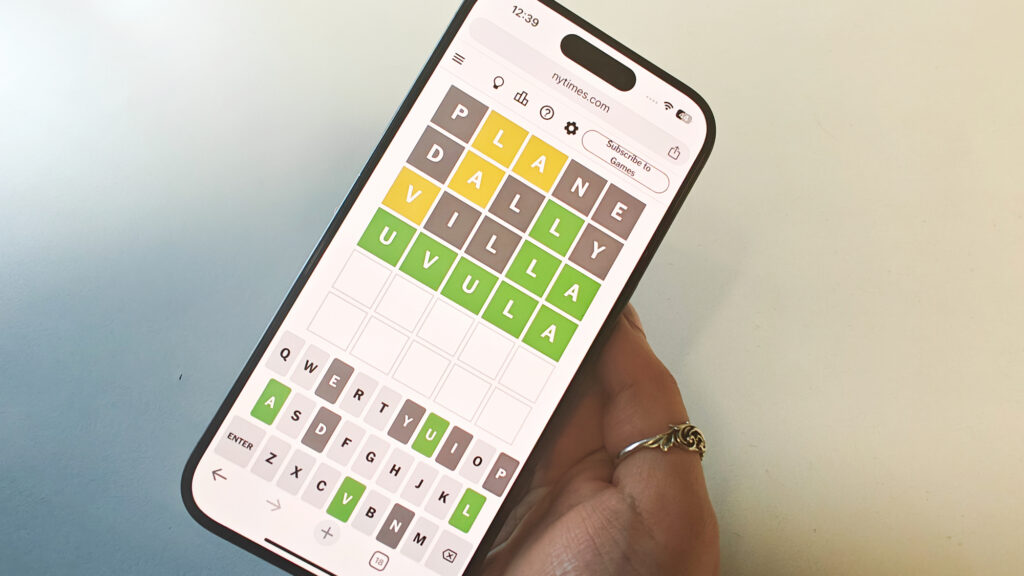
- Green letters (correct position) are locked in. Use them in every subsequent guess.
- Yellow letters (in the word but wrong position) must be moved. Try placing them in different spots each round.
- Gray letters should be avoided entirely unless you suspect duplicate letters .
Don’t Ignore Duplicate Letters
Wordle answers sometimes contain the same letter twice. Words like “SHEEP,” “BLOOM,” and “FLOOD” have appeared in the past. If you’ve identified a letter but only see one instance in your feedback, don’t rule out the possibility that it appears again .
Balance Risk and Certainty
Your first two or three guesses can be “wild”—try unusual letter combinations to eliminate as many options as possible. But when you’re down to your last two guesses, switch to safe words that fit all the confirmed information. Wild guesses on the final turn usually end in failure .
Real Examples: Wordle Hints in Action
Let’s look at recent Wordle puzzles to see how hints work in practice.
Example 1: Wordle #1,783 (May 7, 2026)
The Answer: BUDGE
Hints available:
- Contains the letter G
- Starts with the letter B
- Two vowels in the word
- It’s a verb
- Definition: “To move even a little”
A player using just the first hint (“contains G”) would know to include G somewhere. The vowel hint tells them to watch for two vowels, and the definition points toward movement-related words. Even without revealing the first letter, a skilled player could deduce BUDGE from these clues .
Example 2: Wordle #1,784 (May 8, 2026)
The Answer: UMBRA
Hints available:
- Contains the letter B
- Starts with the letter U
- Two vowels in the word
- It’s a noun
- Definition: “The fully shaded inner area of a shadow cast by an opaque object, especially the area on the earth or moon experiencing the full phase of an eclipse”
This is a great example of why hints matter. “UMBRA” is not a common word for most players. Without the definition hint, many would never guess it. But with hints pointing toward astronomy and shadow, the puzzle becomes solvable rather than frustrating .
The Ethics of Using Wordle Hints
Is using a hint cheating?
The Wordle community generally agrees: no, as long as you’re honest about it.
Wordle is ultimately a personal challenge. There’s no leaderboard, no prize money, no competitive ranking system. The only person you’re competing against is yourself .
Many players adopt a personal “hint ladder” approach:
- Try three guesses completely independently
- If stuck, check for repeated letters or vowel count
- If still stuck, look up the first letter
- Only check the full answer as a last resort
This approach preserves the satisfying “aha!” moment while preventing the frustration of staring at a blank grid for twenty minutes.
The New York Times even acknowledges this by publishing official hints alongside their answer reveal. If the game’s own publisher provides hints, they’re clearly considered part of the legitimate experience .
Browser Extensions: Automated Wordle Hints
For players who want hints without leaving the Wordle page, browser extensions offer automated assistance.
PyWordle (Firefox): This extension connects to a service that analyzes your current game state and provides up to five statistically likely guesses, ranked from most to least probable. It uses a database of over 39,000 valid five-letter words, filtered through Google Ngram frequency data to prioritize common words over obscure ones .
Wordle Hint (Chrome): This simpler extension detects when you press the Enter key on your physical keyboard and displays a list of possible words on the left side of the screen. It works automatically after installation—no configuration required .
Limitations to consider: No hint tool is perfect. Browser extensions use their own dictionaries, which may not exactly match the NYT’s word list. Sometimes they’ll suggest words that aren’t valid answers. Always use your judgment when following automated suggestions .
Beyond Daily Hints: Becoming a Better Wordle Player
The best long-term strategy is to need fewer hints over time. Here’s how to improve:
Build Your Vocabulary: Wordle draws from a specific set of English words—common enough to be recognizable, but not so common that every puzzle is trivial. Reading widely exposes you to more five-letter words organically.
Learn Letter Frequency: In English, E is the most common letter, followed by A, R, I, O, T, N, and S. Your guesses should prioritize these letters early .
Study Word Patterns: Certain letter combinations appear frequently. “ING” endings, “TH” and “CH” pairs, and vowel-consonant-vowel patterns can help you guess even when you have limited information.
Play Past Puzzles: The NYT Wordle archive lets you practice on previous puzzles without the pressure of the daily reveal. This is excellent training for spotting patterns and testing strategies .
Conclusion
Wordle hints are not cheating—they’re tools. They keep the game accessible to players of all skill levels without destroying the satisfaction of solving the puzzle yourself.
Whether you check the vowel count, peek at the first letter, or use a browser extension for suggested words, the goal remains the same: enjoying the daily ritual of cracking the code. Some days you’ll solve it in three guesses. Other days you’ll need every bit of help available. Both outcomes are perfectly fine.
The best Wordle player isn’t the one who never needs hints. It’s the one who keeps coming back tomorrow for another round.
Happy puzzling, and may your greens be many and your grays be few.
Frequently Asked Questions (FAQ)
Q: What is the best starting word for Wordle?
A: Popular and effective starting words include AUDIO, CRANE, SLATE, and ADIEU. These contain multiple vowels and common consonants .
Q: Where can I find hints for today’s Wordle without getting the full answer?
A: The New York Times official Wordle Review, gaming sites like TheGamer, and Yahoo Puzzles all provide graded hints that preserve the solving experience .
Q: Are there Wordle hint browser extensions?
A: Yes. PyWordle for Firefox and Wordle Hint for Chrome can analyze your game state and suggest possible words .
Q: Is using Wordle hints considered cheating?
A: Most players and publications consider hints acceptable because Wordle is a personal challenge with no competitive ranking. The NYT even publishes official hints .
Q: Can Wordle answers have repeated letters?
A: Yes. Words like SHEEP, BLOOM, and FLOOD have appeared as answers. Don’t rule out duplicates just because you’ve seen a letter once .