Some films entertain. A rare few transcend entertainment to become something deeper—a cultural milestone, a benchmark of ambition, and a defining moment for a genre. Peter Jackson’s The Lord of the Rings: The Return of the King (2003) is one of those rare treasures. It didn’t just conclude one of the most ambitious filmmaking projects in history; it cemented the entire trilogy’s legacy, proving that fantasy could achieve the highest level of critical and popular success.
More than two decades after its release, The Return of the King stands as a monumental achievement. It is not merely a sequel but the powerful, resonant finale to a nine-hour cinematic saga. While it faced the near-impossible task of living up to its predecessors, it didn’t just meet expectations; for many, it surpassed them, delivering a heart-wrenching and spectacular conclusion that earned it a place in history as one of the greatest films ever made.
The Grand Finale: A Masterful Conclusion
The film’s structure is a testament to the meticulous planning that underpinned the entire trilogy. This was a final act that had been years in the making, and its power comes from the weight of the journey that preceded it. The narrative weaves together multiple storylines with masterful confidence, guiding beloved characters towards their long-awaited destinies . It is a film that earns its emotional payoffs.
Central to its success is the shifting focus back to the heart of the story: Frodo Baggins (Elijah Wood) and his loyal companion Samwise Gamgee (Sean Astin). After the second film, The Two Towers, broadened the scope to focus on human kingdoms and grand battles, The Return of the King brings the hobbits back to the forefront, making their harrowing journey into Mordor the emotional and dramatic core of the film . The weight of the Ring has never felt heavier, and Frodo’s struggle against its corrupting influence is portrayed with agonizing intensity by Wood . Yet, as many critics and fans have noted, it is Sean Astin’s Sam who emerges as the true hero of the film, his unshakeable loyalty and courage providing the film’s beating heart and a powerful statement on where true heroism lies .
The journey is fraught with peril, most notably in the terrifying encounter with the giant spider Shelob. This sequence, a masterclass in tension and visual effects, stands as one of the most frightening episodes in the entire trilogy, showcasing the dark and dangerous path Frodo and Sam must tread . Simultaneously, the rest of the fellowship prepares for a final, desperate stand. The friendship and bond forged between the characters feels genuine and earned, making every victory and sacrifice deeply affecting .
The Siege of Gondor and a Legacy of Spectacle
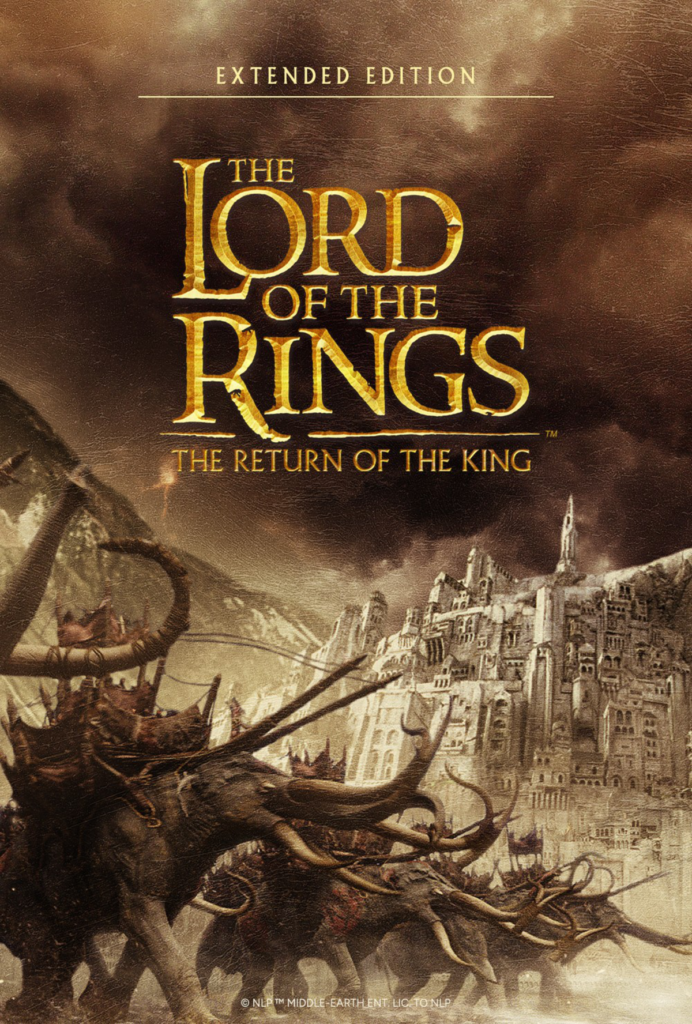
While the hobbits’ quest provides the emotional core, the film is equally remembered for its staggering spectacle. The siege of Minas Tirith is a benchmark in cinematic history, a battle sequence of such immense scale and detail that it remains awe-inspiring . It’s a “pure spectacle” on a level that few films have ever attempted, a vivid, terrifying depiction of war that pits the forces of men against seemingly insurmountable evil .
This is where Peter Jackson’s direction shines brightest. The battle scenes are not just chaotic noise; they are carefully orchestrated to build tension and convey the sheer desperation of the situation . The visual effects, from the terrifying Fell Beasts to the earth-shaking Mumakil (giant elephants), were groundbreaking and remain impressive . This mastery of both intimate character moments and grand, epic warfare is what sets the film apart . The film’s technical achievements across the board—from its production design and costumes to its sound and editing—are flawless, all contributing to a cohesive and believable world .
However, the film’s ambition has also been a point of discussion. Its extended runtime, particularly the famous series of epilogues, has been a subject of debate since its release. While the need to provide closure for a sprawling cast of characters is understandable, some critics and viewers found the multiple endings to be a pacing issue, diluting the impact of the narrative climax . Yet, for many, this is a minor flaw in an otherwise triumphant conclusion; a testament to how deeply Jackson and his team cared about these characters, refusing to simply bid them farewell in a rush .
Oscar Glory and Enduring Influence
The film’s critical and commercial success was unprecedented for a fantasy film. At the 76th Academy Awards, it achieved the ultimate validation, winning all 11 Oscars for which it was nominated, tying the record set by Ben-Hur and Titanic . This clean sweep included the coveted Best Picture award, making it the first fantasy film to ever win the top honor—a feat that shattered preconceptions about the genre and proved it could be taken seriously on the highest stage .
Its legacy, however, extends far beyond its trophy count. The film’s success paved the way for a new era of fantasy and franchise filmmaking . It demonstrated that epic, fantasy-based stories could be both critically acclaimed and globally profitable, influencing everything from the Harry Potter and Marvel Cinematic Universe franchises to the sprawling television sagas like Game of Thrones . It also revolutionized how visual effects are used to create believable, emotionally resonant characters, with Gollum becoming the gold standard for motion-capture performance .
Conclusion: A Fitting End to an Unforgettable Journey
The Lord of the Rings: The Return of the King is an experience. It is a film that rewards the patience and investment of its audience, delivering a conclusion of grand, eloquent confidence . It is a story about the darkest despair and the most stubborn hope, about the power of friendship, sacrifice, and the strength found in the most humble of beings .
While it may have its detractors who find its length or sentimentality a flaw, its place in cinematic history is undeniable. It is a crowning achievement and a fitting end to a legendary trilogy, a film that allows us to say a deeply moving farewell to a world and its characters. It remains one of the great cinematic achievements of the 21st century, a masterpiece that continues to inspire and move audiences as it reminds us that even in the darkest of times, hope is never truly lost .