Let’s be real for a second. There is a specific kind of hollow feeling you get after finishing a truly phenomenal series. The finale credits roll, the screen goes dark, and you are left sitting in silence, blinking at your TV, wondering where the next ten hours of your life went.
For global K-drama fans, that existential crisis almost always has one name attached to it: Signal.
Signal Trailer
Created by the brilliant writer Kim Eun-hee and released in 2016, Signal is not your average romance or slice-of-life K-drama. It is a brooding, tension-soaked, time-bending crime thriller that has been widely—and I mean widely—acclaimed as one of the greatest Korean dramas of all time. But let’s cut through the hyperbole. What actually makes this show tick? Is it just a gimmick with a fancy walkie-talkie, or is there true, human depth buried beneath the suspense?
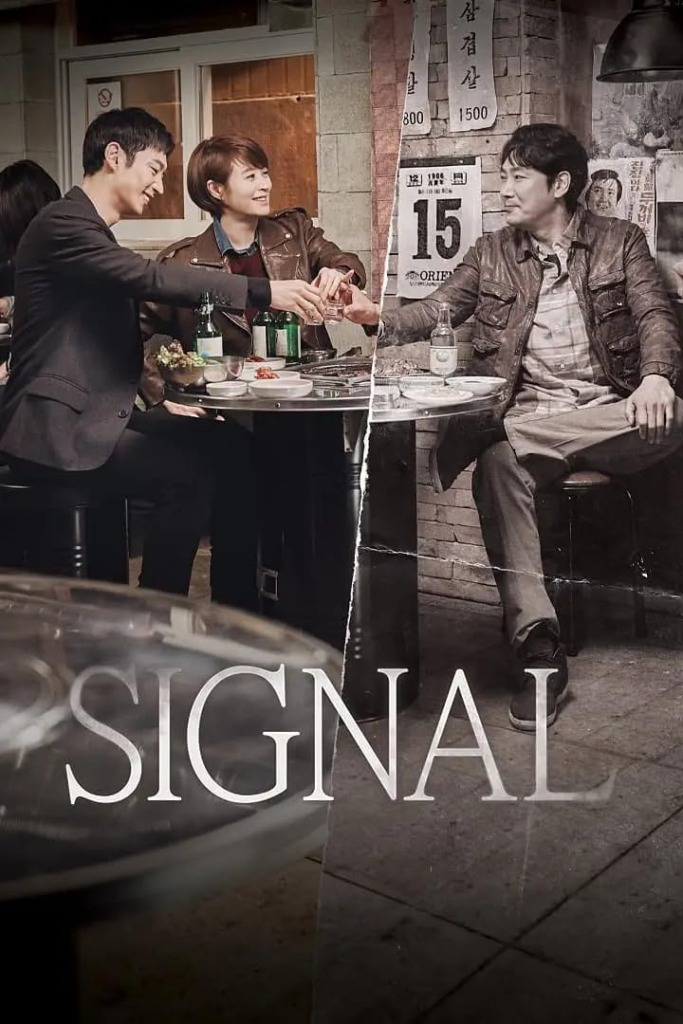
Grab a blanket, turn off the lights, and let’s unravel the mystery of Signal.
The Premise That Hooks You: A Walkie-Talkie Out of Time
At its core, Signal operates on a deceptively simple, yet brilliantly high-concept premise. We are introduced to Park Hae-young, a modern-day profiler in the year 2015. He is a brilliant detective, but deeply scarred by a childhood trauma. One fateful night, while working a cold case, he finds an old, dusty walkie-talkie in a storage room.
To his disbelief, the walkie-talkie crackles to life. On the other end is Detective Lee Jae-han—a fierce, morally upright, and slightly reckless police officer operating in the year 1989.
Through this impossible connection, the two men realize they are investigating the same string of serial murders. Together, they piece together clues across a 26-year gap. But here is the terrifying catch: when the detective in the past solves the case, the present changes. Park Hae-young wakes up to find that history has literally been rewritten, with new crime scenes, new victims, and terrifyingly altered memories.
The Missing Link: Cha Soo-hyun
However, the show is not a two-man act. Bridging these two timelines is the incredible detective Cha Soo-hyun, played by the legendary Kim Hye-soo. In 1989, she is a rookie officer trying to survive in a male-dominated, corrupt police force, taking guidance from Lee Jae-han. In 2015, she is a hardened, successful team leader who has long since buried the trauma of that era.
Her character is the emotional core of the series. She is the physical proof that time has passed, that the events of the past have literally carved lines into her face. Watching her navigate the two timelines—being a hopeful youth in one moment and a haunted veteran in the next—is a gut-wrenching, compelling experience.
More Than a Gimmick: Why the Time Travel Works
Now, if you are a seasoned sci-fi viewer, you might roll your eyes. Time travel tropes are often messy, full of gaping plot holes. However, Signal uses its fantasy element with surgical precision.
A Mechanism for Regret and Redemption
The walkie-talkie is not a “magic wand.” It doesn’t grant the protagonists infinite do-overs. When Park Hae-young warns Lee Jae-han about a future murder, the detective in the past has a chance to save a life. And he does! But the victory is often short-lived. The show brilliantly illustrates the “butterfly effect.” Saving one victim might inadvertently create a domino effect that causes another innocent person to die days later.
This pushes the narrative into a deeply philosophical space. It forces the characters—and us, the viewers—to ask a painful question: If you could save one person, but knowing it might doom another, would you still do it? There are no easy answers in Signal, and that moral ambiguity is what keeps the tension razor-sharp.
The Butterfly Effect Done Right
Why does this show succeed where Western sci-fi shows like Heroes or FlashForward failed? Because Signal holds its timeline changes to a brutally strict logic. When the past changes, we don’t see it simply in a news headline.
Park Hae-young feels the changes. He will walk into a police station that looked one way, only to find it completely remodeled overnight. He will look at his present-day mentor, Cha Soo-hyun, and see a fresh wound on her face that wasn’t there moments ago. The tension isn’t just intellectual; it is visceral. The characters are physically impacted by the weight of their own interference, and their fear is incredibly palpable.
The “Human Touch” Behind the Cold Cases
Despite the sci-fi hook, Signal is grounded in a gritty, unflinching reality. This is where the show truly earns its reputation as a masterpiece of the crime genre.
The Realism of the Crime Portrayal
Kim Eun-hee doesn’t write a “police procedural” where every case is solved in an hour. She writes a documentary of police failure. The detectives in the 1980s lack modern DNA testing, fingerprint databases, and basic resources. They are running on pure instinct and sheer desperation. Furthermore, the show bravely tackles the relentless, soul-crushing corruption within the police force of that era.
There is a brilliant moment where Lee Jae-han fights against his own superiors to save a child. He isn’t fighting a serial killer; he is fighting the administrative machinery that wants to sweep the case under the rug. You can feel the frustration bleeding through the screen. This authentic portrayal of institutional inefficiency makes the show universally relatable, no matter what country you are from.
Experience Insight: What makes this even more haunting is that the show is heavily inspired by real-life, unsolved serial murder cases in South Korea, most notably the famous Hwaseong serial murders (which was actually solved in real life just a few years after the show aired). Knowing that these horrors actually happened adds a chilling weight to every single frame.
The Heartbreaking, Three-Decade-Long Romance
I need to take a moment to talk about the agony of the romance in Signal. Between Lee Jae-han (1989) and Cha Soo-hyun (2015), there is a powerful connection. They have a shared trauma, a mutual respect, and a burning desire to protect one another.
But because of the time slip, they almost never get to be together in the same physical space. When 2015 Cha Soo-hyun looks at an old photograph of her younger self with Lee Jae-han, the grief she feels is a physical weight. She is mourning a man who, in her timeline, has likely been dead for decades, even though he is simultaneously alive and fighting in the past. It is a love story defined by absence rather than presence. It rips your heart out, because it feels incredibly real. Love is rarely easy; in this show, it is a devastating, long-distance tragedy.
Technical Mastery: How Signal Builds Unbearable Tension
If the writing is the skeleton, the direction and editing are the nervous system of Signal. The show is an absolute masterclass in suspense.
The “No Cell Phone” Rule
Imagine a life-and-death situation. In a modern show, you just pull out your iPhone and call for backup. In Signal, Park Hae-young is entirely dependent on a broken walkie-talkie that turns on at random intervals. Director Kim Won-seok masterfully uses this limitation to build dread. Sometimes the walkie-talkie crackles to life at the exact worst moment; other times, it stays terrifyingly silent. The audience sits on the edge of their seat, waiting for that static hiss, knowing that if it doesn’t come, a character is going to die.
A Cliffhanger in Every Episode
The pacing of Signal is relentless. Almost every single episode concludes with a jaw-dropping, neck-snapping cliffhanger. You literally cannot stop. It is designed to exploit your dopamine receptors.
But here is the human touch secret: unlike a lot of modern streaming shows that end on cliffhangers just to get you to stream the next episode, Signal’s cliffhangers always serve the character. They aren’t just shocking deaths. They are shocking realizations. A detective realizes they have been working with the killer. A victim reveals a terrifying link to the present. The cliffhangers are built on narrative reveals, not cheap action.
The Elephant in the Room (Ending & Season 2)
Now, we have to discuss the ending, because Signal holds one of the most famous—and debated—final episodes in K-drama history.
The Finale That Divides Audiences
Without giving too much away, the show ends on a massive, open-ended cliffhanger. The final shot leaves viewers gasping, but also deeply frustrated. Does it resolve the overarching mystery? No. Does it give closure to the romance? Not entirely.
However, let me offer an honest, balanced perspective. While many viewers (myself included) screamed at the screen wanting more, the ending is thematically perfect. The entire show is about time, karma, and the fact that some mysteries are never solved. To give the audience a neat, tidy bow would have betrayed the gritty, messy realism the show established. By leaving it open, the writer is saying, “The story doesn’t end here. The fight for justice is eternal.” It’s intellectually satisfying, even if it is emotionally excruciating.
The Unfulfilled Promise of Season 2
There has been talk of a Season 2 for literal years. The writer, Kim Eun-hee, has confirmed she is working on a script. However, scheduling conflicts with the massive stars (Lee Je-hoon is incredibly busy) and the high production costs have kept it in production hell.
To my fellow fans: do not wait for Season 2 to start Season 1. Watch the first season for what it is. It is a complete, stunning piece of art, even if the door is left deliberately ajar for more.
Is Signal Right For You? Who Should Watch It
If you are on the fence, let me lay it out plainly.
The Call to Action for Thriller Fans
If your favorite Western shows are True Detective, Mindhunter, The Killing, or Broadchurch—you absolutely must watch Signal. It rivals the best of HBO and BBC in terms of quality. It is dark, it is cerebral, and it treats the mystery with the respect it deserves.
A Trigger Warning (Emotional Realism)
I must be completely trustworthy here. This show is not for everyone. Signal deals with the murder of young children, graphic violence, and unrelenting despair. There is no comic relief to break the tension. Park Hae-young’s childhood trauma is brutal to watch.
If you are currently dealing with heavy anxiety or are sensitive to depictions of grief, I would suggest watching this show in small doses, or perhaps saving it for a time when you are in a resilient emotional headspace. It is a masterpiece, but it is a heavy, heavy masterpiece.
Conclusion: An Echo Across Time
Ultimately, Signal accomplishes something that very few television shows can claim. It is an edge-of-your-seat crime thriller that occasionally borders on horror. Yet, at the same time, it is a profound, poetic meditation on human regret. It asks us: what would you change if you had a second chance? And what would you sacrifice to make things right?
Park Hae-young and Lee Jae-han don’t just solve crimes; they represent our own collective desire to heal the wounds of the past. When the final static fades on the walkie-talkie, you are left not with answers, but with a burning, raw hunger for justice.
If you haven’t seen it yet, do yourself a favor. Go into it blind, prepare for sleepless nights, and let the mystery wash over you.
Okay, spoiler-free chat time in the comments! For those who have watched it, what is your take on that final scene? Did it frustrate you, or did you appreciate the open-ended genius? And for the ones who haven’t—what is the longest you have ever waited for a season two? Let’s talk about the show that refuses to fade into time.