Beyond the Tutorial: 15 Cords that define the Master daily Bonus Structure
Beyond the Tutorial: Every mobile game has a daily bonus system. But few developers understand that these systems are not just calendars—they are behavioral architectures designed to pull players back day after day. After analyzing successful implementations across gaming, rewards apps, and behavioral science, I’ve identified the 15 essential cords that separate amateur daily bonuses from master-level retention engines.
Welcome to the advanced course.
Cord #1: The 7-Day Rolling Cycle
The most common and proven structure is the 7-day rolling cycle. Players log in for seven consecutive days, receive escalating rewards, and then the cycle resets—either back to Day 1 or continuing with a new cycle at higher difficulty.
This structure works because it matches the natural human week. Seven days is short enough to feel achievable but long enough to build a habit. The weekly reset creates a predictable rhythm: players know that Sunday (or whatever their final day falls on) brings the big reward.
Real-world implementation: Ingress, Niantic’s location-based AR game, uses a 7-day “Hackstreak.” The first portal hack each day earns +500 AP and double items. On the seventh consecutive day, the bonus jumps to +1000 AP and triple items. Miss a day? Reset to Day 1 .
Why it works: The escalating rewards create a “sunk cost” mentality. By Day 4 or 5, players feel they’ve invested too much to let the streak die.
Pro tip: Never let Day 7 be only slightly better than Day 6. The jump should be dramatic—at least 2x the value—to create a genuine sense of milestone achievement.
Cord #2: The 30-Day Mega-Cycle
For games targeting serious engagement, the 7-day cycle is just the warm-up. The real commitment structure is the 30-day mega-cycle.
Tower Defense Simulator implements this effectively: 30 days of rewards, with values escalating significantly toward the end. Day 30 offers 10 premium currency units—substantially more than the 50-100 units offered on earlier days. After Day 30, the streak continues (Day 31, 32, etc.), but the reward pattern repeats from Day 1 .
Why 30 days? It’s roughly a month—long enough to feel like a meaningful achievement, short enough that players can see the finish line. The psychology is powerful: “I’ve already done 25 days. I can’t stop now.”
The retention math: A player who reaches Day 30 has logged in every single day for a month. That player’s lifetime value is exponentially higher than a casual user. The 30-day cycle doesn’t just reward loyalty—it identifies and nurtures it.
Warning: Do not reset the streak to zero at Day 30. That feels punitive. Instead, do what Tower Defense Simulator does: continue the streak counter (Day 31, Day 32) while repeating the reward pattern. The streak number keeps growing; the rewards cycle sustainably .
Cord #3: The Two-Tier Reward Track (Free vs. Premium)
Not all players are equal. Not all players should receive equal rewards. The two-tier reward track—one column for free players, one column for premium subscribers—is the most direct monetization lever in daily bonus design.
How it works: Every day, players see two rewards. The left column is free for everyone. The right column is locked—available only to premium pass holders. The premium rewards are roughly 2-3x more valuable than the free track.
Why it drives ARPU: Free players see what they’re missing every single day. The friction is constant. Eventually, the cumulative value becomes too tempting to ignore. This is the “reverse trial” effect described by gamification experts: players sample premium benefits through streak rewards and then convert to paying users to maintain access .
Implementation example from OT/BR Canary: The daily reward system allocates different reward quantities based on account type. Free accounts receive 5 items on Day 1; premium accounts receive 10 items. By Day 7, free accounts get a 10-minute XP boost; premium accounts get 30 minutes at the same 50% bonus rate .
The psychological hook: Premium rewards are not hidden behind a paywall—they’re displayed prominently next to free rewards. The player sees exactly what they’re missing. This is more effective than hiding premium content entirely because it creates constant, low-grade dissatisfaction that converts to purchases.
Cord #4: The Streak Multiplier System
A standard daily bonus rewards the act of logging in. A streak multiplier rewards the consistency of logging in. The difference is subtle but profound.
Instead of “Day 1: 10 coins, Day 2: 15 coins, Day 3: 20 coins,” a multiplier system offers: “Streak x1: 10 coins for playing. Streak x2: 20 coins for playing. Streak x3: 30 coins for playing.” The reward scales exponentially with consistency.
The active multiplier variant: Some games apply the multiplier to gameplay earnings, not just login rewards. For a limited window after login—typically 15-60 minutes—all in-game earnings are multiplied by the streak factor. A player on a 30-day streak earns 2x or 3x coins from every action during that window .
Why this drives engagement: The multiplier becomes a ticking clock. Players know they have a limited time to maximize value. This extends session length dramatically and increases exposure to monetization mechanics.
Real example: “Crossword Daily” uses a 5-level scale. Day 1 offers baseline rewards. Day 5 (maximum streak) offers a “Double Star” bonus lasting 60 minutes. Miss a day? Back to Level 1. Players become intensely motivated to maintain that 60-minute double-earning window .
Cord #5: Joker/Streak Protection Tokens
Every streak system eventually breaks against real life. Vacations happen. Emergencies occur. Phones break. If your system offers no forgiveness, frustrated players abandon entirely.
The solution is streak protection tokens—sometimes called Joker Tokens, Streak Freezes, or Grace items.
How they work: For every milestone achieved (e.g., 30 consecutive days), the player earns one protection token. If they miss a day, the token automatically consumes to preserve the streak. No action required from the player. The streak continues as if they had logged in.
Real implementation: The OT/BR Canary daily reward system awards players 1 joker token per month, with a maximum storage of 3 tokens. If a player misses a login day and has tokens available, the token is consumed and the streak remains intact. Only when tokens run out does the streak reset to zero .
The psychological win: Protection tokens feel like a reward, not a consolation prize. Players earn them through loyalty. When a token saves a streak during an unavoidable absence, players feel grateful to the game rather than punished by it.
Monetization angle: Some games sell additional protection tokens as IAP. A player on a 200-day streak facing a week-long vacation is highly motivated to spend $0.99 for streak insurance. This converts loss aversion directly into revenue .
Cord #6: Milestone Badges and Status Indicators
Currency and items are functional rewards. But status indicators—badges, titles, profile frames—tap into social motivation, which often overrides economic rationality.
The Swagbucks “Winning Streak Badge” system is a masterclass in this cord:
| Streak Length | Badge Name | Bonus |
|---|---|---|
| 7 days | 7 Day Star | 25 SB |
| 14 days | 14 Day Fanatic | 100 SB |
| 21 days | 21 Day Triumph | 200 SB |
| Full month | Monthly Master | 300 SB |
Note that 28 days lights up both the 7 Day Star and 21 Day Triumph badges simultaneously .
Why this works: Badges are permanent. Currency gets spent and forgotten. But a “14 Day Fanatic” badge displays on the player’s profile forever. It’s a trophy. Players will extend streaks not just for the immediate reward but for the permanent recognition.
Social layer: When badges are visible to friends or guild members, they become competitive. Players compare collections. Missing a day means losing progress toward the next badge tier—and falling behind peers.
The durational badge: Some games offer badges for absolute counts, not just consecutive streaks. “Logged in 100 days total” is different from “100-day streak.” Both have value. The absolute badge rewards persistence; the consecutive badge rewards consistency. Use both.
Cord #7: The Hard/Soft Currency Split
Not all rewards are created equal. The most sophisticated daily bonus systems distinguish between soft currency (earned through gameplay, spent on common items) and hard currency (premium, IAP-purchased, spent on exclusive content).
The optimal split: Approximately 70% soft currency, 20% hard currency, 10% exclusive cosmetics or power-ups.
Why this matters: Soft currency feels rewarding but doesn’t cannibalize IAP revenue. Players still need to purchase hard currency for premium items. The hard currency drops in daily bonuses are just frequent enough to feel generous but not sufficient to satisfy demand. They create “almost enough” scenarios that drive top-up purchases.
From the Fancade system: Daily challenge completions earn gems (hard currency) and progress toward Fanscore (soft progression). The streak system resets every 7 days with a 25-gem reward. A “hard” completion (full daily challenge including difficult tasks) earns 3 gems. These small, consistent hard currency drips keep players engaged without replacing the cash shop .
The warning: Never give away so much hard currency that players stop buying it. If your daily bonus provides 100 gems per week and the cheapest premium item costs 200 gems, players will save for two weeks and purchase without spending money. Price your rewards carefully.
Cord #8: Time-Zone Respect (Local Midnight Reset)
A daily reset that ignores player time zones frustrates international audiences. A player in Japan forced to claim rewards at 3 AM local time will resent the system, not engage with it.
The gold standard is local midnight reset—the daily bonus resets at 00:00 in the player’s own time zone. Ingress defines this clearly: “A day is defined as any day of the week, from midnight to midnight in your local time.” If you hack a portal at any time on Tuesday local time, you’re eligible for the next daily bonus starting Wednesday at 12:00 AM local time. No 24-hour wait required .
Implementation complexity: Local midnight requires server-side time zone detection (from device settings or IP address) and storage of each player’s reset baseline. It’s more work than a single global reset but dramatically improves player experience.
Alternative approach: Some games use a rolling 24-hour timer from the moment of last claim. Chanced’s daily bonus system uses this model: a visible countdown shows when the next bonus becomes available, and the bonus can be claimed once every 24 hours from the time of your last claim . This is technically simpler but can “drift” if players claim at inconsistent times.
The verdict: Local midnight is best for habit formation. Players associate the reset with a specific time of day—midnight, bedtime, morning—and build consistent routines. Rolling 24-hour timers create cognitive overhead (“When did I claim yesterday?”) and reduce consistency.
Cord #9: The Grace Period Window
Even with local midnight resets, players miss claim windows. The grace period is a short buffer—typically 2-6 hours after reset—during which the previous day’s reward remains claimable.
Why this matters: A player who falls asleep at 11:55 PM and wakes up at 12:05 AM has lost their streak under a hard reset. They will be disproportionately angry because the “miss” feels trivial. A grace period eliminates this class of entirely preventable churn.
Technical implementation: Store two timestamps: last_claim_date and grace_period_end. If current time is within 6 hours of the expected claim window for the previous day, allow claim and mark it as “late but valid.”
The trade-off: Grace periods reduce urgency. Some studios argue that the fear of a hard cut drives better login behavior. The consensus in modern game design is that grace periods are worth the slight reduction in urgency because they dramatically reduce churn from edge cases.
Best practice: Do not advertise the grace period. Players who need it will discover it gratefully. Players who don’t need it won’t exploit it if it’s short (2-4 hours).
Cord #10: Vocation/Class-Specific Rewards
Generic rewards are fine. But personalized rewards—items tailored to the player’s class, build, or play style—create a sense that the daily bonus was designed specifically for them.
Real implementation: The OT/BR Canary system pulls vocation-specific items from a DailyRewardItems lookup table. A knight receives different consumables than a sorcerer. The reward isn’t just valuable—it’s useful to that specific player .
Why this drives ARPU: A generic coin reward works for everyone but excites no one. A class-specific power-up—”Mage Mana Potion” or “Warrior Rage Elixir”—is more valuable to the recipient and feels like a thoughtful gift rather than a routine payout.
Implementation considerations: This requires tracking player class or preferred play style. For games without formal classes, offer choice: “Choose your reward: Option A, Option B, or Option C.” Choice alone increases perceived value, even if the options are economically equivalent.
The data: A/B tests consistently show that choice-based rewards have 20-30% higher perceived value than forced rewards, even when the average payout is identical. The illusion of control is powerful.
Cord #11: Playthrough Requirements (For Sweepstakes/Rewards Apps)
For rewards apps and sweepstakes platforms, playthrough requirements protect the economy while maintaining the feeling of generosity.
Chanced’s daily bonus system offers free Sweep Coins (SC) through daily logins. Day 1-3: 0.10 SC. Day 4-5: 0.20 SC. Day 6-7: 0.30 SC. But there’s a catch: all SC received from daily bonuses is subject to a 10x playthrough requirement. A player who receives 0.30 SC must play through 3.00 SC of wagering before it becomes redeemable for cash .
Why this is brilliant: The player feels they received 0.30 SC of value. The platform’s actual liability is much lower because most players will lose the SC through playthrough before redemption. The daily bonus drives engagement without draining the prize pool.
For game designers: Even if you don’t operate a sweepstakes model, the principle applies: make daily bonus rewards usable not just hoardable. A reward that must be spent (and potentially lost) during gameplay drives more active engagement than a reward that piles up in an inventory.
Cord #12: The Forced Reset (Anti-Perpetual Streak)
Not all streaks should continue forever. Some of the most effective systems implement a forced reset after a fixed number of days.
Two implementation models:
- The Hard Cap (7 days): Chanced and Ingress both reset after Day 7. The streak ends, and the player starts again from Day 1. This creates a predictable weekly cycle that players can plan around .
- The Continuation with Reset (30 days): Tower Defense Simulator continues the streak count (Day 31, Day 32) but resets the reward pattern to match Day 1. The streak number keeps growing; the rewards cycle sustainably .
Why a forced reset is healthy: Ever-increasing streaks eventually become impossible to maintain. A player who reaches Day 365 is under immense pressure—one missed day wipes a year of progress. That pressure causes anxiety, not engagement. A forced reset (or reward pattern reset) caps the downside of missing a day.
The 30-day model is superior: The streak counter never resets to zero—players retain their “I logged in 247 days in a row” bragging rights. But the reward system cycles, so missing a day after 247 days is painful but not catastrophic. You lose reward progression but not the streak number.
Cord #13: Stacking Bonuses with Active Events
A daily bonus that exists in isolation is weak. A daily bonus that stacks with active events, battle passes, and limited-time promotions is exponentially more powerful.
Ingress demonstrates this principle: “The Hackstreak item multiplier will stack with other active bonuses or multipliers (e.g. from a Portal Fracker or from Glyph hacks, or from Apex).” A player using a Fracker (temporary item bonus) during their streak bonus hour gets multiplicative value .
Implementation strategy: Design your daily bonus system to be compatible—not competitive—with other engagement mechanics. The login reward should multiply the value of event participation, not replace it.
Example from Fancade: Daily challenges feed into Fanscore (cumulative progression), Arena rankings, and gem earnings simultaneously. One daily completion advances multiple engagement tracks, making the daily ritual feel productive across dimensions .
The takeaway: Never silo your daily bonus. Connect it to everything else. The player who logs in for their daily reward should immediately see progress toward the battle pass, event goals, and social leaderboards.
Cord #14: The Dramatic Day 1 Hook
First impressions matter. The Day 1 reward must be valuable enough to motivate a return on Day 2—but not so valuable that players feel they’ve “won” and can quit.
Common mistake: offering 100 premium currency on Day 1 to hook players. The problem: players claim the reward, spend it immediately, and have no reason to return.
Better approach: offer a small consumable that requires use rather than collection. A 15-minute XP boost, five extra lives, or a temporary power-up that expires. The player must play immediately to extract value—and playing creates engagement momentum that carries into Day 2.
From the data: OT/BR Canary’s Day 1 reward is 5 basic consumable items. Not exciting. Not generous. But paired with the 7-day streak promise, it’s enough to start the cycle .
The Day 1 psychological goal: Not delight—anticipation. The player should claim Day 1 and immediately think, “I wonder what Day 2 gives.” Curiosity, not satisfaction, drives return.
Cord #15: Loss Aquisition Feedback Loops
The most advanced cord is invisible to players but drives all behavior: the loss aversion feedback loop.
Loss aversion is the psychological principle that losses hurt twice as much as equivalent gains feel good. A player who loses a 30-day streak feels 2x the pain of the pleasure of earning the 30-day reward in the first place .
How to weaponize this ethically:
- Show the streak prominently. The number should be visible on every screen, not buried in a menu.
- Show what’s at stake. “Your 47-day streak will reset to Day 1 if you miss today.”
- Create “almost enough” scenarios. Offer a small purchase to preserve the streak. “Save your streak for 99¢.” Players on long streaks convert at 10-15% on these offers .
- Celebrate streak saves. When a player uses a protection token to save their streak during an absence, congratulate them. “Your Streak Shield saved Day 248!” This reinforces the value of the protection mechanic.
The ethical boundary: Do not create fake urgency. Do not lie about streak reset conditions. Do not make streak restoration impossible or punitive. Loss aversion should motivate, not manipulate.
The Master Daily Bonus: Bringing It All Together
A master daily bonus structure is not a calendar. It is a system of systems—a behavioral architecture with fifteen moving parts, each reinforcing the others.
| Cord | Function |
|---|---|
| 7-Day Cycle | Creates weekly habit rhythm |
| 30-Day Mega-Cycle | Extends engagement horizon |
| Two-Tier Track | Drives premium conversion |
| Streak Multiplier | Extends session length |
| Joker Tokens | Provides forgiveness |
| Milestone Badges | Creates permanent status symbols |
| Hard/Soft Split | Balances generosity and monetization |
| Local Midnight | Respects global audiences |
| Grace Period | Prevents trivial churn |
| Personalized Rewards | Increases perceived value |
| Playthrough Requirements | Protects economy |
| Forced Reset | Caps downside risk |
| Event Stacking | Multiplies engagement |
| Day 1 Hook | Starts the cycle |
| Loss Aversion Loop | Drives daily behavior |
Each cord is necessary. None is sufficient alone. The mastery is in the integration.
Frequently Asked Questions (FAQ)
Q: What’s the optimal streak length before offering a protection token?
A: Award the first protection token at 30 days. This gives players a meaningful milestone to work toward and ensures the token is earned, not given.
Q: Should my daily bonus reset at local midnight or on a 24-hour timer?
A: Local midnight is superior for habit formation. Players associate the reset with a specific time of day and build consistent routines.
Q: How much of my daily bonus value should be premium currency?
A: No more than 10-15%. Enough to feel generous, not enough to satisfy demand. Players should always feel “almost enough” to trigger top-up purchases.
Q: What’s the best Day 1 reward?
A: A small consumable that requires immediate use—15-minute boost, extra lives, temporary power-up. This drives active engagement, not passive collection.
Q: How do I prevent players from exploiting the system with multiple accounts?
A: Server-side timestamp validation, device fingerprinting, and minimum 30-second active session requirements before streak credit is awarded.
Q: Is a 7-day or 30-day cycle better?
A: Use both. 7-day cycles for immediate habit formation and weekly rewards. 30-day cycles for major milestones and retention extension. They serve different psychological purposes.
-

How to Make a Pink & Gold Beaded Flower Bracelet: 6-Step DIY Guide
How to make a stunning pink and gold beaded flower bracelet with this easy 6-step tutorial. Perfect for beginners using seed beads, a simple bead-weaving
-
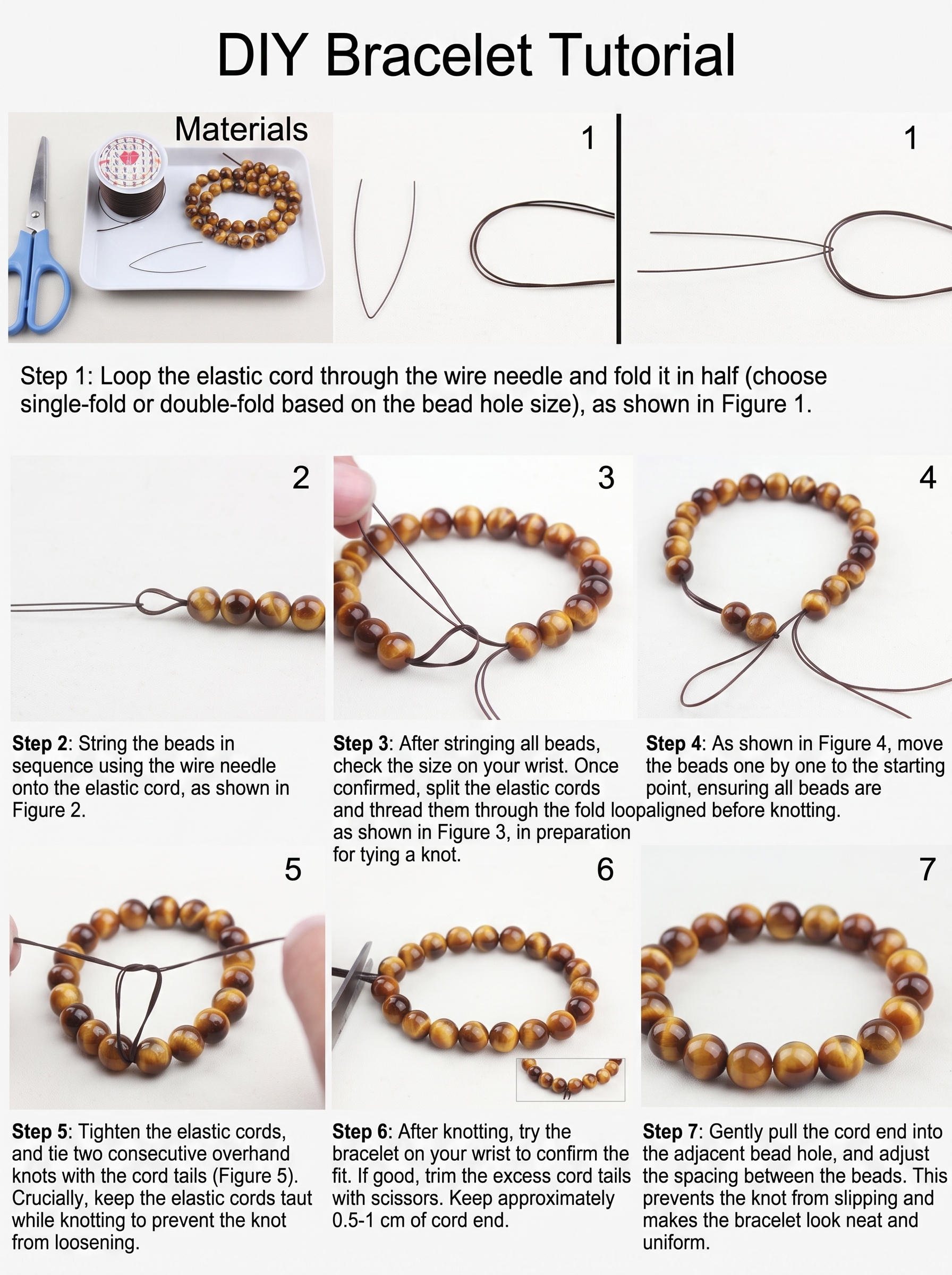
How to Make a DIY Stretch Beaded Bracelet: Easy 7-Step Beginner Guide
Learn how to make your own beautiful stretch beaded bracelets with this easy 7-step tutorial. Perfect for beginners using elastic cord, a bead needle,
-
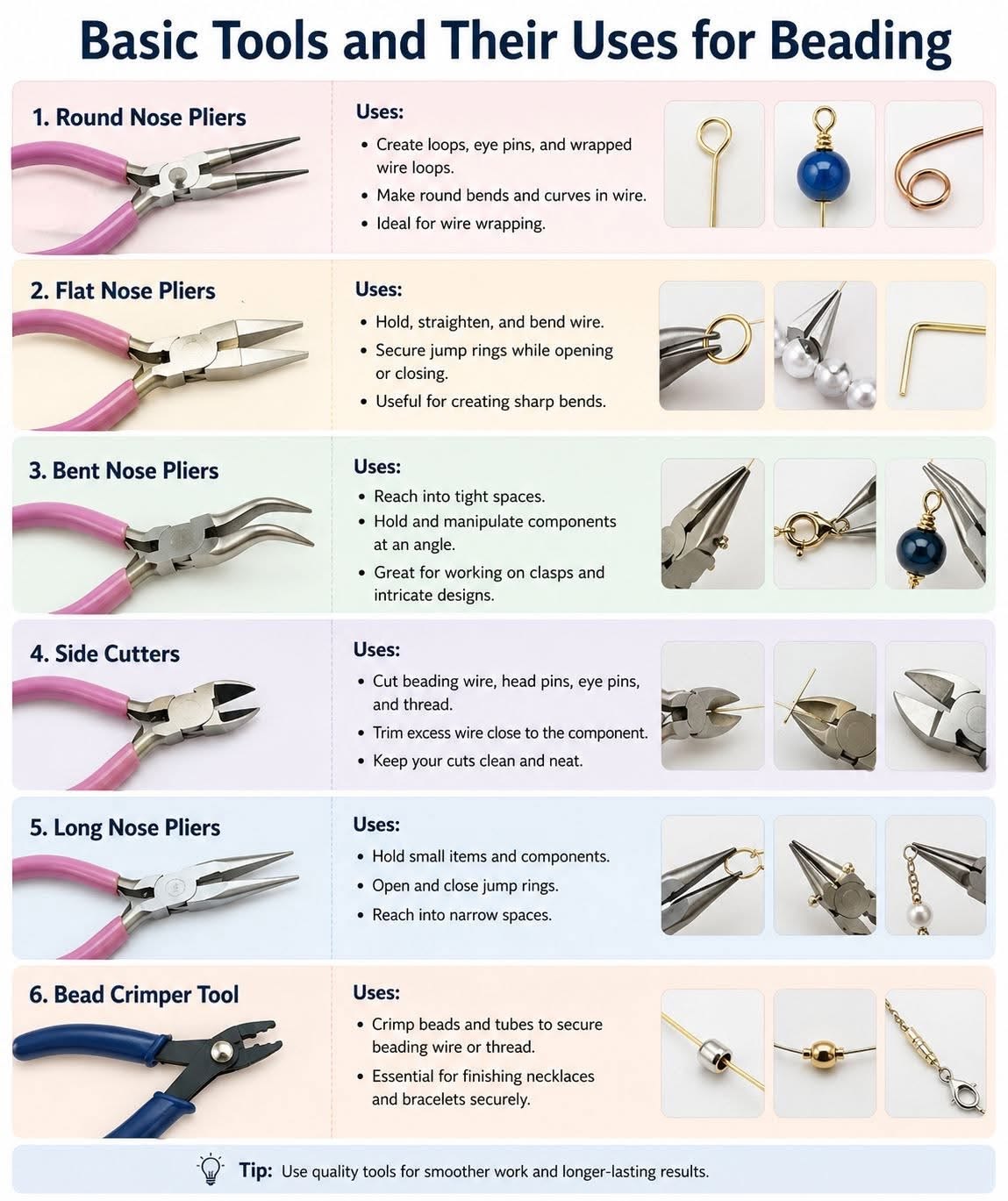
Basic Beading Tools: A Beginner’s Guide to Essential Jewelry Making Supplies
Basic Beading Tools: New to jewelry making? This beginner’s guide breaks down the 6 essential beading tools you need, including pliers, cutters, and crimpers