The 2026 Logistics War: How the Lobito and Capricorn Corridors are Redefining Trade
The Lobito Capricorn corridors 2026 trade routes are shifting global logistics. Discover how Africa and South America are bypassing traditional chokepoints to reshape copper, lithium, and agri-food supply chains.
Introduction: The New Arteries of Global Commerce (the Lobito Capricorn Corridors)
For centuries, global trade flowed through a handful of strategic chokepoints: the Panama Canal, the Suez Canal, the Strait of Malacca. A disruption in any one of them could ripple across the world economy.
That era is not ending. But it is being challenged.
In 2026, two massive infrastructure projects are progressing in high gear—one in Africa, one in South America. The Lobito Corridor is reconnecting Angola, the Democratic Republic of Congo, and Zambia to the Atlantic Ocean. The Capricorn Bioceanic Corridor is carving a transcontinental highway across South America, linking the Atlantic and Pacific Oceans.
Together, they represent a $5.9 billion bet on a more decentralized, resilient, and efficient global trading system. They are designed to bypass traditional bottlenecks, slash transit times, and redirect the flow of critical minerals like copper, cobalt, and lithium—the building blocks of the green energy revolution.
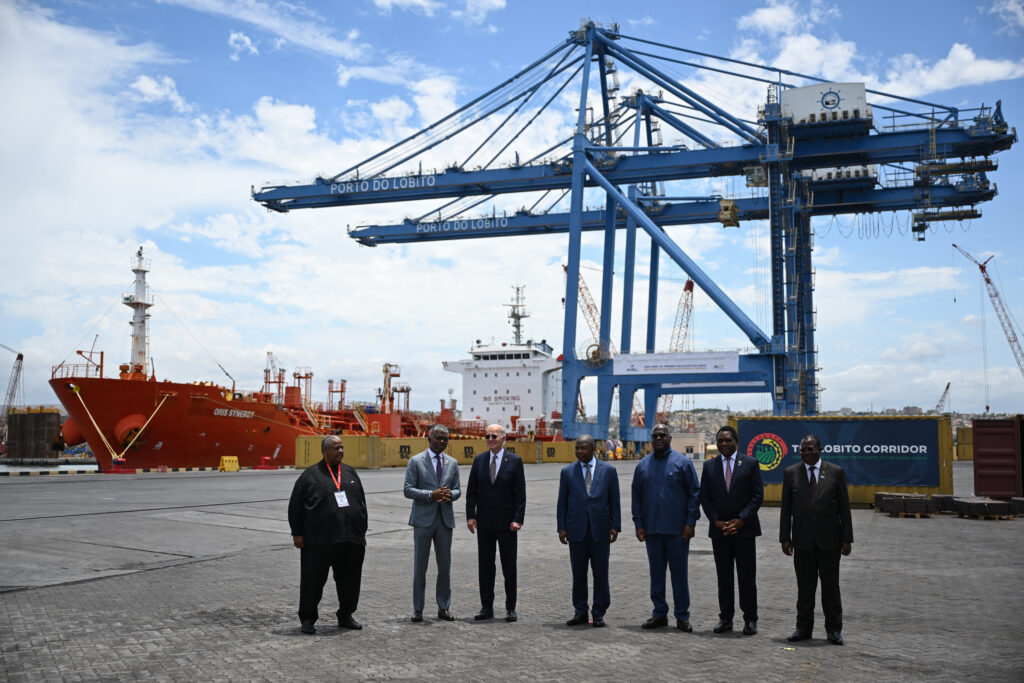
In this article, we will examine how the Lobito and Capricorn corridors 2026 trade routes are progressing, the geopolitical forces driving them, and what their completion will mean for global supply chains.
Part 1: The Lobito Corridor – Africa’s Atlantic Gamble
1.1 The Vision: Copper to the Coast
The Lobito Corridor is not a new idea. The Benguela Railway, its backbone, was originally built by Portuguese colonists in the early 20th century to transport minerals from the Congolese copperbelt to the Atlantic port of Lobito. But decades of civil war in Angola (1975-2002) left the line largely destroyed.
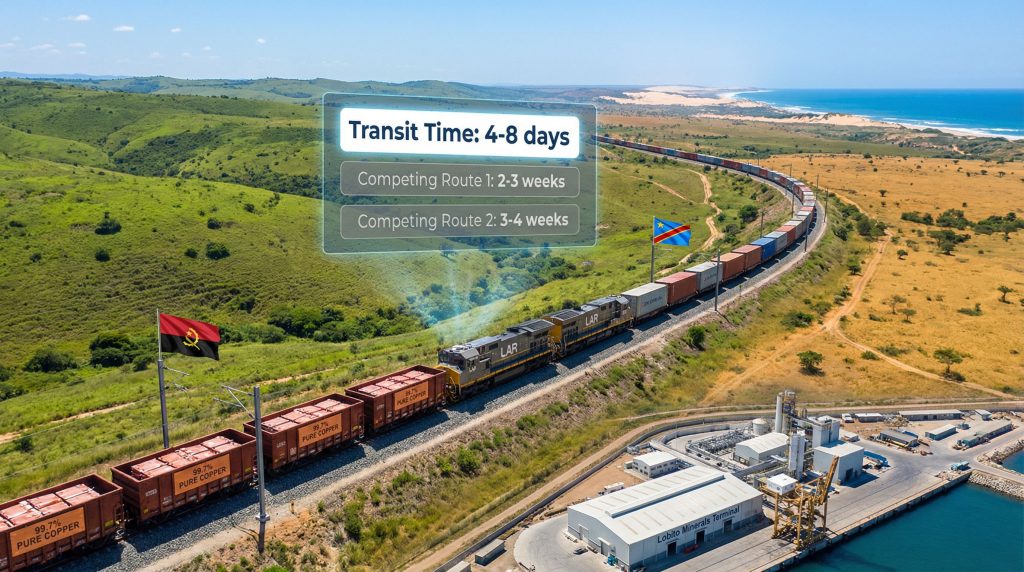
Now, a consortium called Lobito Atlantic Railway (LAR) —backed by Mota-Engil (construction), Trafigura (logistics and commodities), and Vecturis (railway operations)—holds a 30-year concession to operate, rehabilitate, and expand the line.
The vision is ambitious: create a 1,300-kilometer rail corridor linking Lobito on Angola’s Atlantic coast to the mineral-rich Katanga province of the DRC, with a future extension to Zambia’s copper belt.
1.2 The Stakes: $2.7 Billion and Counting
The financial commitments are substantial:
| Source | Investment |
|---|---|
| U.S. International Development Finance Corporation | $553 million loan |
| Development Bank of Southern Africa | $200 million |
| European Union (total commitment) | ~€2 billion ($2.3 billion) |
| Africa Finance Corporation (Kamoa-Kakula smelter) | $150 million |
| Total (approximate) | ~$2.7+ billion |
The EU has emerged as the largest foreign backer, driven by its desperate need for secure critical mineral supplies following Russia’s invasion of Ukraine. The European Investment Bank and private European companies have lined up behind the project, viewing it as a strategic hedge against Chinese dominance in African mining.
1.3 Progress in 2026: Trains Are Moving
This is not a future promise. Freight is already moving.
In 2025, LAR ran 5,000 trains on the Angolan section of the line. While 90% were passenger services, the remainder carried copper, cobalt, and industrial supplies. Today, LAR can run approximately one “copper train” per day from the DRC to Lobito, returning with one “sulphur train” per day—sulphur being essential for copper processing.
Copper accounts for about 95% of the Congolese freight volume, shipped as cathode plates in sealed containers. Cobalt moves in one-tonne bags. LAR has also received proposals for manganese and lithium shipments, but for now, copper demand takes priority.
Upon completion of rehabilitation works, annual transport capacity is expected to reach approximately 4.6 million metric tonnes, with transport costs for critical minerals projected to drop by 30%.
1.4 The Missing Link: Zambia
The corridor’s greatest challenge remains Zambia, Africa’s second-largest copper producer. An old rail line connects Zambia’s northern mining belt to the DRC’s rail network, but it requires a full overhaul—a project estimated at $4 billion and 10 to 15 years.
For now, Zambia is not on LAR’s near-term agenda. CEO Nicholas Fournier told AFP in May 2026: “We have been approached for numerous discussions regarding a possible extension to Ndola in Zambia, but at present, it is not really on my radar” .
The EU is exploring an alternative: upgrading a road from northern Zambia to the Angolan town of Luacano, where minerals could be loaded onto trains bound for Lobito.
1.5 Geopolitics: Business Over Politics
The Lobito Corridor is often framed as a geopolitical chess match between the West and China. For years, it was billed as the largest U.S. infrastructure investment in Africa, culminating in President Joe Biden’s 2024 visit to Lobito.
But on the ground, the reality is more pragmatic. Approximately 70% of mines in the DRC are Chinese-owned, and many are already using the Lobito line to ship copper and receive sulphur. As LAR’s Fournier put it: “My priority is the business of the operation, not the geopolitical tussle” .
China, for its part, is not standing still. In late 2025, Beijing signed a $1.4 billion agreement with Zambia and Tanzania to rehabilitate the Tazara railway, securing access to an Indian Ocean port.
Part 2: The Capricorn Bioceanic Corridor – South America’s Transcontinental Highway
2.1 Connecting Two Oceans by Road
While Africa builds a rail corridor, South America is building a 2,400-kilometer highway called the Capricorn Bioceanic Corridor. The route runs from the Brazilian Atlantic port of Santos westward through Brazil’s interior, across Paraguay’s Chaco region, through northwestern Argentina, and on to the Chilean Pacific ports of Antofagasta and Iquique.
The project has been in planning since the 2015 Asunción Declaration, signed by the presidents of Argentina, Brazil, Chile, and Paraguay. It is designed to do what the Panama Canal—currently constrained by drought and capacity limits—cannot: provide a direct, overland alternative for moving goods between the Atlantic and Pacific.
2.2 The Numbers: $1.2 Billion and 14 Days Saved
Total investment in the Paraguayan section alone has reached approximately $1.1 billion, with the total corridor investment estimated at $1.2 billion.
The economic benefits are staggering. Once fully operational, the Capricorn Corridor is expected to:
- Reduce transport times by up to 14 days compared to current shipping routes
- Cut approximately 4,000 nautical miles from traditional maritime routes
- Double bilateral trade flows between Brazil and Chile
For landlocked Paraguay, the corridor is transformative. For Argentina’s northern provinces—Salta, Jujuy, and Orán—it represents a once-in-a-generation development opportunity.
2.3 The Bridge: Almost There
The centerpiece of the corridor is a massive international bridge over the Paraguay River, linking Carmelo Peralta in Paraguay with Porto Murtinho in Brazil’s Mato Grosso do Sul state.
In February 2026, the bridge was 82.58% complete, with projections to reach 84.58% by the end of March. The bridge involves approximately 14,000 tons of steel, with a central cable-stayed span designed to preserve year‑round river navigation. Full completion is projected for mid-2026.
But—and this is a significant “but”—the bridge alone will not open the corridor.
2.4 The Reality Check: 2027 or 2028 for Full Operations
UPI reported in April 2026 that full freight operations are more likely in 2027 or even 2028. Delays remain on multiple fronts:
- Brazilian access roads to the bridge, contracted through DNIT, are not expected until late 2026
- Paraguay’s final paving segment in the western Chaco, where the route crosses into Argentina, is on a similar timeline
- Argentine and Chilean mountain crossings require additional work
Nevertheless, the corridor is already functioning in a limited capacity. In March 2026, the first commercial imports—rice from Argentina’s Entre Ríos province and cleaning products from Brazil—arrived in Antofagasta via the corridor. Oranges from Jujuy followed.
As Ricardo Díaz Cortés, governor of Antofagasta, said: “We are seeing the first sprouts of what the Bioceanic Corridor will do” .
Part 3: Why This Matters for Global Trade
3.1 Bypassing the Chokepoints
Both corridors share a common strategic logic: diversification of trade routes.
The Panama Canal, long the linchpin of Atlantic-Pacific trade, endured severe drought restrictions in 2023-2024, forcing ships to wait weeks for passage or reroute around South America’s Cape Horn. The Suez Canal, meanwhile, remains vulnerable to geopolitical shocks, as the Red Sea shipping crisis of 2024-2025 demonstrated.
The Capricorn Corridor offers a direct overland alternative for South American exports, bypassing the canal entirely. The Lobito Corridor provides a faster, more secure route for African minerals, avoiding the congested ports of Durban or Dar es Salaam.
3.2 Critical Minerals and the Green Transition
The Lobito Corridor sits on arguably the most valuable mineral real estate on the planet.
- The DRC holds over 50% of the world’s cobalt reserves (essential for EV batteries)
- Zambia and the DRC together hold roughly 9% of global copper reserves
- The region also contains lithium, nickel, and manganese—all critical to renewable energy infrastructure
Bypassing traditional logistics bottlenecks is not merely an efficiency play. It is a security imperative for Western governments seeking to reduce reliance on Chinese-controlled supply chains.
3.3 Economic Development Beyond Mining
Both corridors are designed as economic development platforms, not just transport routes.
The Lobito Corridor is expected to stimulate agricultural production, logistics services, energy development, and small business growth along its length. The Africa Finance Corporation has invested $100 million in Zambia’s first battery-grade copper sulphate plant, moving the region beyond raw material exports toward local processing.
Similarly, the Capricorn Corridor is already enabling Paraguayan beef and Argentine grains to reach Pacific ports faster, opening new markets in Asia. As one Paraguayan economist noted, the corridor forces a fundamental question: if the next generation of global industry draws on South America’s resources, what scale of planning can support that opportunity?
Conclusion: The War for Trade Routes
The Lobito and Capricorn corridors 2026 trade routes represent a quiet revolution in global logistics. They are not flashy. They are not fast. But they are shifting the tectonic plates of international commerce.
In Africa, trains are already hauling Congolese copper to the Atlantic, bypassing decades of decay and neglect. In South America, a bridge is rising over the Paraguay River, connecting two oceans by road for the first time in modern history.
Neither corridor is complete. Zambia remains a missing link. The Capricorn’s access roads lag behind its signature bridge. Geopolitical winds shift with every election.
But the direction is clear. The world is building alternatives to the old chokepoints. And when these corridors are fully operational, the map of global trade will look very different.
The logistics war has begun. The new arteries are opening.
Frequently Asked Questions (FAQ)
What is the Lobito Corridor?
A rail project linking Angola’s Atlantic port of Lobito to the mineral-rich DRC and Zambia, backed by over $2.7 billion in investment from the U.S., EU, and private partners.
What is the Capricorn Bioceanic Corridor?
A 2,400-kilometer highway connecting Brazil’s Atlantic coast to Chile’s Pacific ports via Paraguay and Argentina, designed to bypass the Panama Canal.
When will these corridors be fully operational?
The Lobito Corridor is already moving freight and aims to reach Kolwezi in the DRC within two years. The Capricorn Corridor is likely to achieve full freight operations by 2027 or 2028.
How much time will the Capricorn Corridor save?
Up to 14 days and approximately 4,000 nautical miles compared to traditional maritime routes through the Panama Canal.
Why are these corridors important for critical minerals?
The Lobito Corridor serves regions holding over 50% of the world’s cobalt and 9% of global copper reserves—essential for EV batteries and renewable energy.
Call to Action (CTA)
Are you following the development of these mega-corridors? Do you work in logistics, mining, or trade policy? Share your insights in the comments below. And if you found this analysis valuable, share it with a colleague navigating the changing currents of global supply chains.