Romania Breaks Ground on the $4.7B Neptun Deep Project
The Neptun Deep Black Sea gas project 2026 has begun pipeline construction. Discover how Romania’s $4.7B offshore development will reshape European energy security and nearly double the nation’s gas output by 2027.
URL Slug:
Introduction: A Milestone Beneath the Waves
In the depths of the Black Sea, approximately 160 kilometers off the coast of Romania, a transformation is underway. Giant vessels the length of football fields are welding steel pipes into a continuous ribbon destined for the seabed. This is not a drill. This is Neptun Deep—and it has entered its most critical phase.
On May 4, 2026, Austria’s OMV Petrom and Romania’s state-owned Romgaz officially launched construction of the offshore pipeline that will transport natural gas from the Black Sea to the Romanian shore . The $4.7 billion (€4 billion) project stands as one of the European Union’s largest energy developments, holding an estimated 100 billion cubic meters (bcm) of recoverable gas .
In this article, we explore how the Neptun Deep Black Sea gas project 2026 is progressing, what it means for Romania’s energy independence, the technical marvels involved in undersea construction, and the controversies surrounding this ambitious endeavor.
Part 1: The Numbers That Matter
| Metric | Value |
|---|---|
| Total Investment | ~€4 billion ($4.7 billion) |
| Recoverable Gas Reserves | ~100 billion cubic meters (bcm) |
| Expected Annual Production | ~8 bcm |
| Pipeline Length | 160 km |
| Pipeline Diameter | 30 inches (76 cm) |
| Target First Gas | 2027 |
| Production Wells | 10 (4 drilled, 6 underway) |
| Vessels Mobilized | ~50 (up to 10 pipe-layers) |
When production begins in 2027, Neptun Deep will nearly double Romania’s current gas output, which stood at 9.2 bcm in 2025 . This leap will transform Romania from a marginal player into the largest natural gas producer in the European Union .
Prime Minister Ilie Bolojan, who met with OMV representatives in March 2026, confirmed that the project remains on schedule, with exploitation set to begin next year . The geopolitical stakes could not be higher. As the EU scrambles to reduce its dependence on Russian gas following the 2022 invasion of Ukraine, Neptun Deep offers a domestic, reliable, and politically secure alternative.
Part 2: The Technical Marvel—Building a Subsea Highway
2.1 The Fleet Has Arrived
The first vessel to arrive in Romanian waters was the Castoro 10, a specialized pipe-lay vessel over 160 meters in length . It is installing the pipeline’s first section in the nearshore coastal area, connecting to a microtunnel already constructed in Tuzla—a technology that enhances work safety and minimizes environmental impact.
But Castoro 10 is just the beginning. The project will mobilize approximately 50 vessels in total, including the Castorone—one of the largest and most powerful offshore pipelayers globally, stretching 330 meters—and the JSD 6000, a multipurpose deep-water pipelaying and heavy-lift vessel .
2.2 The Pipeline Assembly Line
Watching a pipe-lay vessel in action is like observing a floating factory. The pipeline joints are aligned, welded together, tested, and coated on board before being lowered in a continuous string to the seabed . This system enables rigorous quality control at each step and high operational efficiency even in harsh offshore conditions.
The pipeline itself is constructed from thousands of steel pipe segments. Once completed, it will transport natural gas from the offshore production platform to the shore, where it will be metered and delivered to Romania’s National Transmission System .
2.3 Platform and Wells
Beyond the pipeline, Neptun Deep’s infrastructure includes:
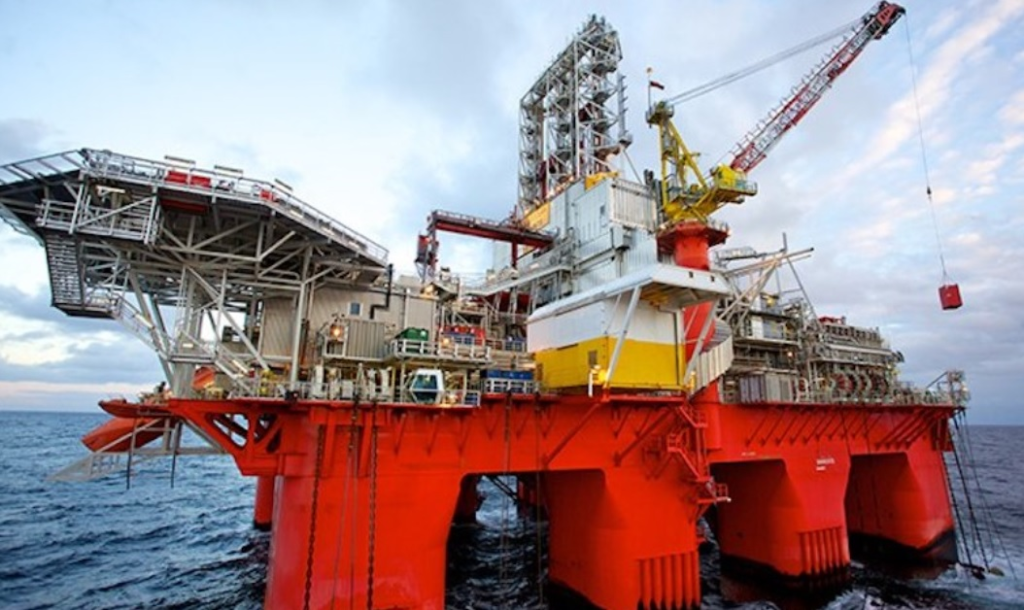
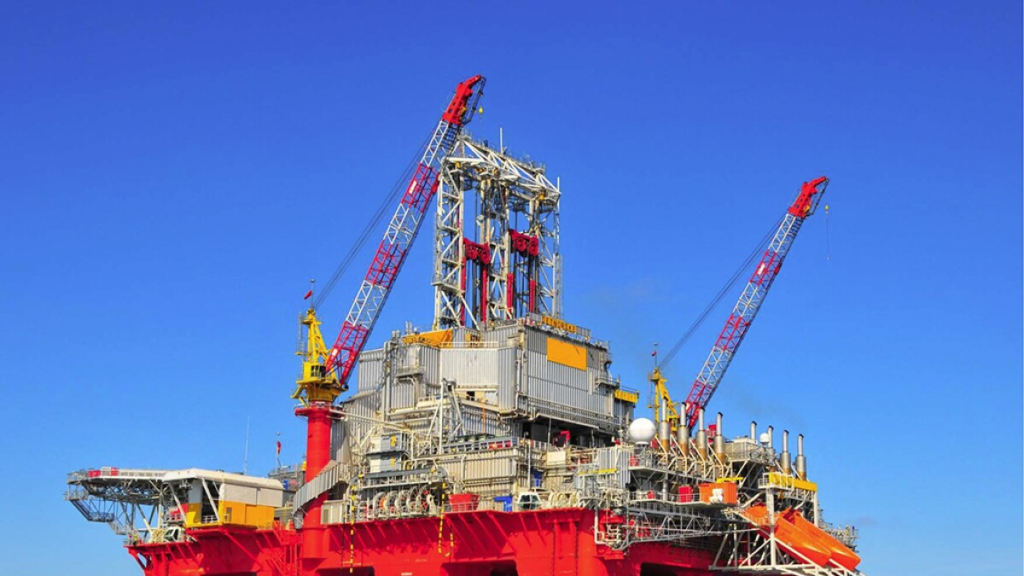
- An offshore production platform (currently under construction in Indonesia and Italy, expected to arrive in the Black Sea later in summer 2026)
- Three subsea production systems
- Ten production wells (four already drilled on the Pelican South field, six underway on the Domino field)
Christina Verchere, CEO of OMV Petrom, summarized the ambition: “Neptun Deep is a strategic project for Romania and for the energy security of the region. In 2026, we will make significant progress here: installing the offshore pipeline, subsea equipment, and the production platform” .
Part 3: Geopolitics and Energy Security
3.1 A Blow to Russian Dominance
For decades, Eastern Europe danced to the tune of Gazprom. Russia’s natural gas exports were a lever of political influence, and winter brought not just cold but diplomatic pressure. Neptun Deep changes the calculus.
Romania’s energy minister, Bogdan Ivan, stated in January 2026 that the physical advancement of the project is slightly ahead of the initial schedule, with first gas expected in the first half of 2027 . Once operational, Neptun Deep will supply not only domestic consumers but also export markets.
Germany and Moldova have already been named as recipients, and other European countries, including Slovakia, have expressed interest . This positions Romania as a critical hub in the EU’s post-Russia energy architecture.
3.2 The Ukraine Dimension
Adding another layer of complexity, Ukraine’s state-owned Naftogaz is in active talks with OMV Petrom to jointly develop a gas field in the Black Sea . Production would commence only after the current war concludes, but the mere prospect of collaboration underscores the region’s strategic importance.
However, security remains a paramount concern. Romania is actively developing a threat detection system for the Black Sea, with plans to have it operational by 2027—coinciding with Neptun Deep’s first gas . The presence of drifting sea mines and ongoing military activities complicates offshore operations, but Romanian authorities are proceeding with caution.
Part 4: The Environmental Controversy
Not everyone is celebrating the Great Gas Shift. A broad alliance of scientists, lawyers, and environmental groups has raised serious concerns about Neptun Deep’s impact on the Black Sea—already one of the most polluted bodies of water in Europe .
4.1 A Fragile Ecosystem Under Threat
The Black Sea is an ecological anomaly. Its upper and lower water layers hardly intermix, with 87% of its water containing no oxygen. Only the upper layers support life, hosting three endemic dolphin species, over 200 fish species, and rare algae, mussels, and plankton .
Opponents argue that the Neptun Deep project will:
- Endanger marine mammals through loud underwater noises from drilling and construction, which can permanently damage dolphins’ hearing and cause strandings
- Disrupt Natura 2000 protected areas, as the 160 km pipeline crosses two natural reserves essential for endangered migratory birds
- Add significant greenhouse gas emissions, potentially as much as 209 million tonnes of CO2 equivalent over 20 years
4.2 Legal Challenges Persist
Environmental groups have challenged the project in court, arguing that the environmental impact assessment lacks crucial evaluations of climate change, water bodies, and public health effects . Greenpeace took OMV Petrom and Romgaz to court in February 2024 over irregularities in the approval process for one of the project’s permits.
After losing an initial case, Greenpeace announced it would appeal. Meanwhile, Romgaz filed a lawsuit against Greenpeace Romania aimed at shutting down the organization—a case that has since been settled, but which critics cite as evidence of the companies’ aggressive posture toward dissent .
Part 5: What Happens Next?
The timeline for Neptun Deep is ambitious but increasingly credible:
| Milestone | Timeline |
|---|---|
| Pipeline installation (nearshore) | Q2 2026 |
| Pipeline installation (deep-water) | Summer 2026 |
| Production platform arrival | Summer 2026 |
| Platform and subsea equipment installation | Q3-Q4 2026 |
| First gas | First half of 2027 |
Cristian Hubati, OMV Petrom’s Executive Board member responsible for Exploration and Production, noted that the pipeline installation is expected to take approximately two months, with the onshore gas measuring plant at Tuzla completed by summer 2026 .
Conclusion: A Nation Transformed
The Neptun Deep Black Sea gas project 2026 represents more than steel pipes and subsea wells. It is a declaration of energy sovereignty. For Romania, it promises lower energy prices, revived domestic industry, and a central role in Europe’s post-Russian energy order.
For Europe, it offers a genuine alternative to imported fossil fuels—extracted within EU borders, subject to EU regulations, and free from the geopolitical blackmail that has shadowed the continent for decades.
But the costs—ecological, financial, and social—are not trivial. The Black Sea’s fragile ecosystem will bear the burden of extraction. Environmentalists will continue their legal battles. And the shadow of war in the region will not soon lift.
Nevertheless, the pipeline is being laid. The vessels are on station. And by 2027, the first molecules of Romanian Black Sea gas will flow into European homes.
The Great Gas Shift has begun.
Frequently Asked Questions (FAQ)
What is the Neptun Deep project?
Neptun Deep is a major offshore natural gas development in the Romanian Black Sea, a joint venture between OMV Petrom (Austria) and Romgaz (Romania). It holds an estimated 100 bcm of recoverable gas.
When will Neptun Deep start producing gas?
First gas is expected in the first half of 2027, with construction progressing slightly ahead of schedule as of early 2026.
How much will the project cost?
Total investment is approximately €4 billion ($4.7 billion).
Who will receive the gas?
Domestic Romanian consumers and export markets including Germany and Moldova have been confirmed. Other European countries like Slovakia have expressed interest.
What are the environmental concerns?
Critics cite risks to Black Sea dolphin populations from construction noise, disruption of Natura 2000 protected bird reserves, and significant greenhouse gas emissions.
Call to Action (CTA)
Do you believe Neptun Deep is a necessary step toward European energy independence or an environmental gamble too far? Share your perspective in the comments below. And if you found this analysis valuable, share it with someone interested in the future of European energy.